[The Regiment AP] Operation Market Garden (Session 6)

Session 6 – Eindhoven Sector, British 1st Airborne Division

Last session, we introduced new characters for the Arnhem story arc. We have 1st Lt. Kingsley, the officer; Cpl. Rhys, the soldier; and L/Cpl. Wickersham, the medic. Their battalion, 2nd PARA, landed near Oosterbeek around 1400 hrs – 8 miles from their objective at Arnhem Road Bridge. Delays in their advance caused them to miss the opportunity to capture the bridge virtually unopposed. Now they fight to gain control of the bridge, in the face superior numbers and a mechanized force.

Housekeeping

The Regiment is in a period of creative flux where we are continuously editing and – hopefully – improving the basic moves. The two most recent additions are Maneuver, which fills a hole that I had been using engagement moves for – don’t follow my previous, bad examples; use the new move instead – and Push Yourself, which is a re-written combination that replaces the previous Push Yourself and Act Under Fire. These moves are in draft form yet, Push Yourself in particular. I’m sharing them with you now so when I reference them later, you’ll know what I’m talking about.

Maneuver

When you maneuver through a combat zone, roll+tactics. On a hit, you make it here or as close as you can get under the circumstances. On a 7-9, you make contact with the enemy and take fire along the way. On a 10+, if you don’t make contact with the enemy, you evade their detection for now; otherwise, you may choose to make or break contact with the enemy, taking fire as established.

Push Yourself

When you push yourself through physical hardship, emotional trauma, or enemy fire, roll+guts. On a 10+, you keep calm and carry on. On a 7-9, you push through it; but, you take it slow, keep your head down, or cover your ass. Say how and why you avoid a direct confrontation with the problem at hand. GM says what it costs you: time, trouble, respect, etc.

Day 1 – 17 September 1944 – 2133 hrs.

Intralogues – according to spell check, that’s not a word; but, you get the idea. I liked the player epilogues for their characters so much that I asked them to write them as an integral part of future blog posts. See the blocks of text in italics. These snippets will be from the character’s perspective and written by the player. The goal is to give some more insight into what’s going on than my usual God’s-eye view narrative.

The Allies win the Coin Toss and Choose to Kick

The current plan is that 2nd Platoon, led by 1st Lt. Kingsley, with support from his parent unit A Company, will oust the Germans from the apartment complex along the river on the east side of the bridge.

Kingsley shifts the bulk of his 2nd platoon from where it’s indicated on the map to the apartments just to the south while A Coy Commander Cpt. Robinson deploys 1st Platoon, commanded by 2nd Lt. Ramsey, along the dashed arrow to the riverfront building. Kingsley is now in command of a detachment comprised of both 1st and 2nd Platoons. He gets them organized along the attacking front while L/Cpl. Wickersham tends to the wounded.

Cpl. Rhys takes the initiative and begins clearing the building he’s in of civilians – which will soon become the jump off point for the assault. He locates the family whose flat they commandeered last session and tries to enlist their help. The wife is busy taking care of L/Cpl. Conner, who was severely wounded crossing the street last session, while her husband clings to their young daughter at the top of the stairs. Rhys persuades dad to rally all the tenants in the building and lead them out of the combat zone. Mom did the best she could for Conner, so Rhys asks her if he can move Conner into one of the ground floor flats. The nearest belonged to an old couple. Rhys asked the young mom if she would persuade the old couple to leave so they could prop up Conner in there. They refused to leave. Frustrated, Rhys relented and just asked for a couple of pillows and a blanket to prop him up and keep him comfortable.

The civilians start pouring out of the building and Rhys has better things than to extricate recalcitrant geriatrics from their probable end. Wickersham catches up with Kingsley as 2nd Platoon shifts to the jump off point in Rhys’ building while Ramsey’s 1st Platoon backfills their position. Sgt. Powell’s assault squad lines up in the first floor facing the enemy position while the rifle and recon squads occupy upstairs positions to provide covering fire. Rhys, who’s in the first wave, reflects back on the civilian evacuation:

As I wait for the men to form up for the 100 meter charge, I can’t help but think about the old woman who refused to leave her apartment. Didn’t she realize that she is in the middle of a war? Good men were shot by a Nazi machine gun team a stone’s throw from her window and she couldn’t be bothered to evacuate for her own safety? Did she think this was some sort of spectator sport – that bullets wouldn’t go out of bounds? The more I think about her naivety, the more it pisses me off.

Touchback

Kingsley gives the signal and his rifle and recon squads open fire on the enemy position. I tell Kingsley he can spend 1-supply to suppress them and he gladly erases it from the sheet to do so. That’s assault squad’s signal. They charge.

It’s about 100 meters under the bridge, across a grassy green belt, and over a roadway to the enemy-occupied position. It’s completely exposed. If the suppression doesn’t work, if they get pinned down in the open, they’re screwed. The assault squad is broken up into three teams of a couple soldiers each. Each team will enter the apartment complex through a separate door along a 50 m front.

“OK Rhys,” I say, “Roll maneuver.” He gets the 7-9 result: they come under fire along the way. The movement and the suppression reduces the enemy VOF from direct to incidental. Dice get rolled. Rhys and company are worse for the ware; but, they make it across. They take the fight to the enemy in their own end zone.

Rhys’ team breaks through their door and kills a couple of Germans in the hall and adjoining rooms. Three of them surrender; but, Rhys guns them down in cold blood with his bolt action rifle. The first one goes down, three long seconds of dead time as he chambers the next round, the second one falls, three more agonizing seconds, then the third. Rhys’ team, Rickman and Walsh who stand beside him, are dumbstruck.

After Rickman, Walsh, and I killed the opposing soldiers in the entryway, we encounter three more German soldiers in a nearby antechamber. These Germans are unarmed and clearly want to surrender. Rickman and Walsh quickly realize this and slowly started to lower their guns. I keep my sights trained on one of the Germans. I take a breath, shoot the first German, then the second, and then the third. After the last shot, Rickman and Walsh are too shocked to speak. I can’t look them in the eye, but order them to guard the foothold we gained in the building while additional members of 2nd Platoon cross to our position.

Once assault squad gets a toe hold on the other side, rifle squad goes across. Wickersham plans to run across with them. He sees a soldier bleeding out on the street and forms up with Cpl. Gilmore’s team, who are slated to fall in behind Sgt. Powell’s team from assault squad. Wickersham steels himself as he prepares to work on the fallen soldier alone out in the street under enemy fire. Gilmore steps up, telling him he doesn’t have to do it alone. Gilmore tells Wickersham he’ll get the arms if he gets the legs. Wickersham makes the maneuver move and get’s the 7-9 result. They take fire getting across; but, they recover the wounded soldier and make it through the door. Cpl. Gilmore’s team presses on once inside and Wickersham gets to work.

Spiking the Football

The patient is L/Cpl. Hogenson. He’s unconscious; but, breathing; lost a lot of blood. The unit is low on supply and Bobby’s gear is already short. Wickersham has a tough choice to make. Life and cost realized or death and cost avoided? He opens up a vein and Hogenson bleeds out.

Meanwhile, L/Cpl. Johnson and Pvt. Thornburg arrive at Rhys’ position. Rickman and Walsh are still giving Rhys the third degree. Rhys leaves them on the first floor and takes Johnson and Thornburg upstairs.

As I stalked up the stairs in front of L/Cpl. Johnson and Pvt. Thornburg, I thought about the unarmed Germans. If we had taken them prisoner, we would have had to pull men off the line to guard them. We would have had to waste our food feeding them. They’ve killed our brothers, they would kill us if they could. If they were asleep in their beds and some bombing run wiped them out, nobody would call that an execution. They knew what they were getting into here. This isn’t some game where they get to call “timeout” when things don’t go their way. So why the hell do I feel guilty?

Rhys hears Germans shooting out toward the street and sneaks up on them. He gets a 10+ on maneuver so he takes them by surprise. He opens the door and starts shooting. A few of the Germans don’t even have weapons. Again, Rhys kills them all.

I wanted to be first through the door, to maybe take a bullet for Johnson or Thornburg. That’s the point of this thing, right? To die protecting my brothers? To kill those who would harm them? I enter the room without the Krauts noticing. Two are at the window, firing on members of 2nd Platoon as they charge into the building. I killed those two, but there were five other Nazis in the room who appeared unarmed. I slowly advanced into the room, killing unarmed soldiers every few steps. You stood with those who killed my brothers; you’d kill me if you could; but, I won’t give you that chance. A better man might, but I won’t. I became filled with rage as I fired. I hate these Nazis, I hate anyone who would condemn me for executing them, and I hate myself for committing murder. After I killed the last of them, I continued firing shots into his head at point-blank range and kept pulling the trigger after I had emptied my rifle. Eventually I heard Thornburg’s voice far off in the distance.

Rhys has a mental break down.

Wickersham stumbles in on Rhys, long after Johnson and Thornburg left him to his own devices. They are both feeling guilty as hell and they both try to keep from telling the other what’s bothering them, but they can’t help but share a little of what they went through. “Bobby” Wickersham gets the sense that Rhys killed in cold blood and Rhys gets the sense that Bobby isn’t a savior without boundaries. After a few moments of awkward conversation, Wickersham moves on and Rhys is again, left to deal with his actions, alone. They have a smoke and blow off some steam in the process.

Kingsley moves up to his forward elements along with the rest of 2nd Platoon. He is now stressed and wounded from the long day and more than one exposure to enemy fire. Bobby takes care of him while he calls in for a report from each of his squad leaders. Sgt. Powell is MIA, so they find Cpl. Rhys instead. They all report. Kingsley doesn’t catch on to Rhys’ instability and dismisses him without further question. He orders them to consolidate and to locate Powell, if they can.

After getting treatment, Kingsley heads back to Battalion HQ to report and to coordinate the actions of 1st Platoon. Lt. Col. Frost, the battalion commander, is ready to start moving his staff to fill in behind 1st Platoon and, once he does, 1st Platoon will be ready to join Kingsley on the other side of the bridge to clear the Krauts out of the apartment complex.

With a plan in place, Kingsley takes 2nd Lt. Ramsey, 1st Platoon’s leader, on a reconnaissance of the bridge support structure. Kingsley is concerned that the Jerry’s may have wired the bridge with explosives. He gets underneath the bridge on the street. In the darkness, his inspection is inconclusive, so he spots the pedestrian access stairwell and climbs up. He gets a second opportunity to assess the situation, this time he succeeds: the Germans have not yet wired the bridge with explosives.

That’s where we break.

As I am not yet familiar with British decorations, awards will have to wait. Given the nature of this fight, I’ll probably do decorations as an epilogue at the end.

Posted in Actual Play, Role Playing Game, Role Playing Game Design, RPG, The Regiment | Leave a comment

Session 5 – Arnhem Sector, British 1st Airborne Division

Last session, we concluded the tale of the US 101st Airborne Division in Eindhoven Sector. The campaign is moving along the historical timeline there, so that means a long fight ahead for the British 1st Airborne Division in Arnhem, which is the focus of our next story arc.

The Cast of (Player) Characters

We introduce a new cast of characters. These characters will form the core of 2nd Platoon, A Coy, 2nd PARA, 1st Parachute Brigade, British 1st Airborne Division. Their objective is the brass ring, Arnhem Road Bridge.

First Lieutenant Reginald “Roger” Kingsley IV [Officer] (formerly Pfc. Smith) – a volunteered lawyer from London. He joined during the Blitz, and was passed over for Captain a few times – he turned the promotion down at least once himself to stay with his outfit. Weapon: Sten [SMG]

Corporal Tom Rhys [Soldier] (formerly M/Sgt. Franklin / Sgt. Barnes) – he “volunteered” – was offered military service or prison: he chose the army and did well. Weapon: Lee Enfield [Battle Rifle]

Lance Corporal Robert “Bobby” Wickersham [Medic] (formerly Cpl. Amherst) – a drafted artist, sent to airborne school to “be toughened up.” First jump. Weapon: SMLE (Short Magazine Lee Enfield) [Carbine]

Day 1 – 17 September 1944 – 1500 hrs.

The Best Laid Plans

The 1st Parachute Brigade lands in LZ X starting around 1400 hours and assembles, marching out at 1500 hours. 1st PARA (Parachute Battalion) will advance on Arnhem Road Bridge along the railway via Wolfheze. Along the same route, the 1st Recce (Reconnaissance) Sqn. (Squadron), equipped with twin-Vickers Jeeps, will race ahead to the bridge and form a mobile reserve once relieved by the infantry. 3rd PARA will take the northern road route through Oosterbeek to Arnhem road bridge.

2nd PARA, our characters’ battalion, will head south toward Heveadorp and follow along the river road along the southern end of Oosterbeek to Arnhem Road Bridge. 2nd PARA C Coy will attempt to secure Arnhem Rail Bridge and then proceed along the south bank of the lower Rhine to the Arnhem Road Bridge. 2nd PARA B Coy will attempt to capture and restore the pontoon bridge, the center span of which is known to be dismantled. 2nd PARA A Coy along with battalion staff and weapons, will proceed directly to and attempt to secure the north end of Arnhem Road Bridge.

Meanwhile, 1st Airborne headquarters lands at LZ Z and moves into Oosterbeek. 1st Airlanding Brigade lands at LZ S and secures the dropzones around Wolfheze and Ginkel for the second wave on day 2.

Once all the elements of 1st Parachute Brigade link up at Arnhem Road Bridge, they will form a defensive pocket and await relief from XXX Corps, which is expected on the morning of 18 September, day 2. The rest of the British 1st Airborne Division will also arrive on 18 September to secure the area and the Polish 1st Airborne Brigade will follow on 19 September to secure the southern bank of the lower Rhine.

Well, that’s the plan…

 13,000 Meters

The distance 2nd PARA must traverse to reach Arnhem Road Bridge is over 8 miles. They must do so with their heavy packs, their support weapons, and their baggage train.

I’ve worked up a map, based on the historical progression of 2nd PARA en route to the bridge, shown below. For the most part, 2nd PARA’s historical progress could be summed up as mostly 10+ results, with a couple 7-9’s.

I have 1st Lt. Kingsley roll an engagement move for each leg of the journey. The first leg is from LZ X to the road between Heveadorp and Oosterbeek. He gets a 7-9. I tell him 3rd PARA, maybe 1st, is under fire to the north of you. We have been re-writing the engagement moves, so if you’re looking at a released move sheet, this won’t make sense. The basic 6 or less, 7-9, and 10+ still holds, so bear with. To be clear, 1st Lt. Kingsley is rolling on behalf of A Coy. On the 7-9, I offer that they can join the fight with 3rd PARA and probably flank the enemy near Wolfheze or they can proceed without making contact with the enemy. Kingsley is dedicated to the capture of the bridge, so they press on. He bases his decision on the best available intel, which he rolled for and failed, so he got the historical digest, which says – the Germans are in complete disarray; they are in shambles and cannot muster a credible fighting force; they have no armor. This intel is complete horse shit and with a wink and a nod, I tell the players that their characters just jumped on top of Army Group B’s headquarters; the part about 2nd Panzer Corps will come up later. At this point, they are essentially on schedule.

The next leg of the journey is through Oosterbeek to the Arnhem rail bridge. Oosterbeek is a lovely, well-to-do suburb of Arnhem. 2nd PARA hardly notices this as they press forward. Kingsley fails the engagement move roll. Delays. C Coy assembles for their assault on the rail bridge and that stops up traffic. Captain Robinson, A Company’s commander, tasked Kingsley (his 2nd in command) to make sure that the heavy weapons are brought to the front. Kingsley is working out what to do when a staff Major shows up and is about to throw a wrench into the machine by ordering C Coy to disperse. Kingsley petitions up the chain and tells the Major he’s wrong without actually telling him that he’s wrong. He gets a 7-9. It was a career-limiting move on Kingsley’s part, assuming either he or the Major live through this. So instead of setting everyone back further, Kingsley starts directing traffic and gets his platoon and the weapons on the move. C Coy scouts their objective and then marches on it. The road clears up.

At this point, more than a half hour has been lost and A Coy is way ahead of Kingsley’s platoon, battalion staff, and the heavy weapons. So they try to make up some time. I tell the medic, L/Cpl. Wickersham, that the heat and exertion appear to be wearing on the men. Their fighting ability is in question. He assesses the situation and blows it. I tell him that some of the mean look like they’ve just about had it and need a rest. Wickersham petitions up the chain to Kingsley and Kingsley tells Wickersham the ones in bad shape can have a rest; the rest will move on. More delays.

When Kingsley was directing traffic, I had him make the new (trial) officer move planning is everything, which is a specialized replacement for the old make a battle plan move. He succeeded, so he gets +1-forward to his next engagement move. This one takes him from the rail bridge near Oosterbeek to the western suburbs of Arnhem proper. He got a 7-9. Again, he chose to keep moving forward; but, a large explosion in the Oosterbeek area drew his attention and cost him some more time. The Germans blew the rail bridge as C Coy attempted to capture it. Casualties were light. A runner caught up with Kingsley and gave him the scoop. I ask Kingsley if he wants to stop and wait for C Coy or if he wants to press on. He chose to press on.

The final leg of the journey is from the suburbs to the bridge itself. This time, Kingsley gets a 10+ on his roll. He wants to get there – that’s one of his two choices for the move – for the other, I tell him he can wait for C Coy and make contact with the enemy from an advantageous position (note: B Coy is currently occupied with the pontoon bridge) or he can take the initiative and, leaving C Coy behind, press forward into Arnhem without making contact with the enemy. He chooses to press forward. They hear C Coy make contact with the enemy and a protracted fire fight ensues. Because of this decision, both B Coy and C Coy will be surrounded and destroyed by morning. Little does Kingsley know, they too are now completely surrounded and, by miles, cut off from reinforcements. This is a perfect example of how successfully achieving a tactical goal (i.e. a successful engagement move) can result in a strategic cluster fuck.

The Hand of Fate

Once at the bridge, Kingsley reports. Because he’s late, instead of 2nd PARA arriving during the exact 1 hour window where they could have secured the Arnhem Road Bridge virtually unopposed (as they did historically), they actually arrive about 1 hour late and meet with infantry in roughly battalion strength and an unknown mechanized force that has secured the bridge. It’s now just after 9 PM local time.

Here are the results of their first engagement with the enemy. Let me tell you how they got there.

Map Key: Blue are friendlies; red are enemies. Solid lines represent known positions; dashed lines represent suspected positions. Solid arrows represent movement; dashed arrows represent planned or suspected movement.

They started just west of where A Coy is shown, then, on Kingsley’s initiative, they pushed forward to where 2PLT is shown. 2PLT’s advance was stopped by a German patrol under the bridge to thier immediate east. The blue force presence shown under the bridge on the map was originally the opposition force’s position. Sgt. Willis’ recon squad was the first into the building and made contact. 1st Lt. Kingsley ordered Sgt. Powell’s assault squad to the building south of 2PLT’s position, where the large, blue arrow is shown.

Cpl. Rhys leads the charge. Powell’s plan is to have them pop smoke and then dash across. They pop the smoke; but, as the smoke canisters start to provide concealment, a German machinegun opens up from underneath the bridge. Rhys still wants to run across. Fine, act under fire I say. He does; 10+. He and the two others that follow in the first wave make it across, taking only incidental fire. The next wave is not so lucky. A move is failed and the three of them are gunned down: one dead, two in critical condition.

The cry for help reaches Wickersham. He successfully employs his inopportune target move to reach the wounded without taking fire. He asks if he needs to assess the situation to perform triage. I tell him no, the medic move, if he succeeds at it, will cover the successful treatment of the wounded solder – if he wants to treat the worse-off one first, no problem. He does, 7-9. Wickersham spends 1-gear to stabilize L/Cpl. Conner. Conner is now stable; but, is not ambulatory. Next, Wickersham treats the other solder. Again a 7-9. This soldier is not as badly wounded, so once he’s stabilized, he’s able to scuttle off to link up with Rhys. Left alone with a severely wounded soldier, smoke grenades running out of gas, Wickersham decides he’s going to throw Conner over his shoulder and hoof it over to Rhys. I tell him that he’s got to push himself first. He does. He gets Conner into the building with Rhys and the others and sets Conner down and the bottom of the stairs. Wickersham gives Conner a morphine tab and they bond. Then Wickersham dashes across the street under the fading smoke. He makes his inopportune target move with a 7-9, so I only fling incidental harm at him. He makes it back to 2PLT’s position and starts treating the wounded there.

Meanwhile, Rhys and his assistant, Pvt. Rickman, head into the building south of 2PLT’s position, indicated with an arrow. It’s an apartment building. Narrow stairs lead up to flats on each floor; four floors in all. Rhys makes for the second floor, thinking it will give him the best vantage point for attacking the enemy machinegun. They kick down the door of the northeast flat to find a family of three huddled inside – mother, father, child. Panic and screaming ensues. Rhys, assuming they can’t speak English, motions them to stay down and then tells Rickman not to kill them; but, not to put them first either. I tell him to impose his will on them. He blows it. In English, the father replies “Please don’t hurt us!” The daughter breaks and runs out into the hall. The mother and then father follow. The noise alerts the Germans, who start shooting into the flat.

Undeterred, Rhys lobs a grenade out the window at the Germans. It has some effect; but, Rhys isn’t sure how badly he hit the machine gun crew. So, he and Rickman move to the window and pour rifle fire on them. The enemy machinegun team is wounded and they drag themselves to cover on the other side of one of the supporting columns under the bridge.

Back to Kingsley – he wants to put the enemy machinegun out of action ASAP, so I suggest that he could requisition a heavy weapon – a PIAT (Projector Infantry Anti Tank – the British equivalent of the bazooka) perhaps? So he petitions up the chain and gets a 7-9 – cool, you get it – but you fuck someone else over. Somewhere, troops are now engaged with armored vehicles without an anti-tank weapon. He doesn’t want to waste gear on the weapon, so he waits to see how the situation with Rhys unfolds. The German MG stops firing for a while, so he sends his teams in a pincer move to envelope and destroy the enemy. I have him roll act under fire for the NPCs – using Op (Operational Effectiveness – formerly Profile). One’s a hit; one isn’t. The MG acts up again, so I give Kingsley the choice: his men can tough it out and assault it, or he can spend 1-supply and the PIAT gunner can neutralize the enemy. He spends the 1-supply and they gain the position under the bridge, fighting off the surviving Germans.

1st Lt. Kingsley heads over to battalion HQ and speaks with Lt. Col. Frost about the situation. He relays their successes and suggests that if the bulk of A Coy were to attack along the river toward the bridge that, perhaps, they could oust the Germans from the other side. Frost agrees with the plan and orders the attack, as shown with the dashed line from A Coy on the map.

That’s where we left it, 2133 hours on the night of 17-18 September. Next time we’ll see how A Coy’s attack pans out.

The Big Picture

In the last session, we established that XXX Corps will not reach Arnhem any sooner than the evening of 19 September, day 3. That means our boys will have to hold for at least 48 more hours. 1st Lt. Kingsley’s 2nd Platoon has already taken 15% casualties and the bridge remains in enemy hands.

The British

Maj. Gen. Roy Urquhart, commander of the British 1st Airborne Division is cutoff for several hours during a reconnaissance into Oosterbeek. The radios do not work – I played this up a number of times when Kingsley was trying to assess the situation. The motorized recce squadron sortied along the rail line but retires after briefly making contact. 1st and 3rd PARA are held up for a few hours by Kampfgruppe Krafft around Wolfheze. This delay allowed the Germans to form a defensive perimeter in West Arnhem (shortly after A Coy made it through), blocking further advance and splitting the 1st Parachute Brigade in two.

Historically, Arnhem Road Bridge was captured by 2nd PARA during a lucky window of opportunity prior to the arrival of KG Euling and KG Brinkmann. That opportunity was lost due to failed and mixed results rolls and follow-on decisions made by the players.

The Germans

9th SS Panzer Division have cut off 2nd PARA from their division HQ in a bubble around the bridge. 9th SS has also formed a blocking line centered around Kampfgruppe Spindler that prevents 2nd PARA’s relief by 1st and 3rd PARA. From the west, Kampfgruppe von Tettau is poised to retake the landing zones. Overall, right now, the Germans in contact with the British outnumber them by about 3:2. This will change to 3:1 by morning. At Arnhem Bridge, 2nd PARA is already outnumbered 2:1 and it will be almost 5:1 by morning. By tomorrow night, if nothing changes, it will be 10:1. They face the lightly-equipped Kampfgruppe Euling to the northeast; the poorly equipped 3rd Coy, 21st Infantry Regiment to the east, and Kampfgruppe Brinkmann, 10th SS Panzer Division’s armored recce battalion on the bridge itself (and possibly also at the traffic circle junction to the north).

Posted in Actual Play, Role Playing Game, Role Playing Game Design, RPG, The Regiment | 4 Comments

[The Regiment AP] Operation Market Garden (Session 4)

Session 4 – Eindhoven Sector, 101st Airborne Division

Happy Independence Day!

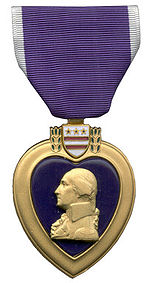
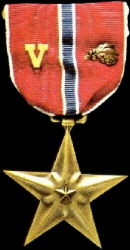
Quick re-cap from last session – Franklin was killed in a heroic attempt to save Amherst’s life, by jumping on a grenade. Amherst warned command that a German attack was imminent. Together, Smith and Amherst turn the tide of the German assault – Smith with his heavy machinegun rolling back the enemy line and Amherst directing mortar fire to blast them to pieces. Franklin’s player takes over Sgt. Barnes, their squad leader. Franklin and Amherst are both awarded the Purple Heart with Oak Leaf Clusters and Franklin is awarded the Bronze Star Medal with Oak Leaf Clusters and Valor Device.

Day 1 – 17 September 1944 – 1802 hrs.

A Mad Scramble

After the German attack is repulsed, 2nd Lt. Fogarty, formerly the not-yet-introduced mortar platoon leader takes over command of the weapons company because he is now the senior officer. S/Sgt. “Papa Bear” gets bumped up to Company XO and commands the mobile reserve, about platoon strength. Sgt. Barnes takes over the static defenses of the bridge with about 60 men, including a heavy machinegun commanded by Pfc. Smith (which is presently out of ammo), 3 serviceable light machineguns, and a German light machinegun (also out of ammo).

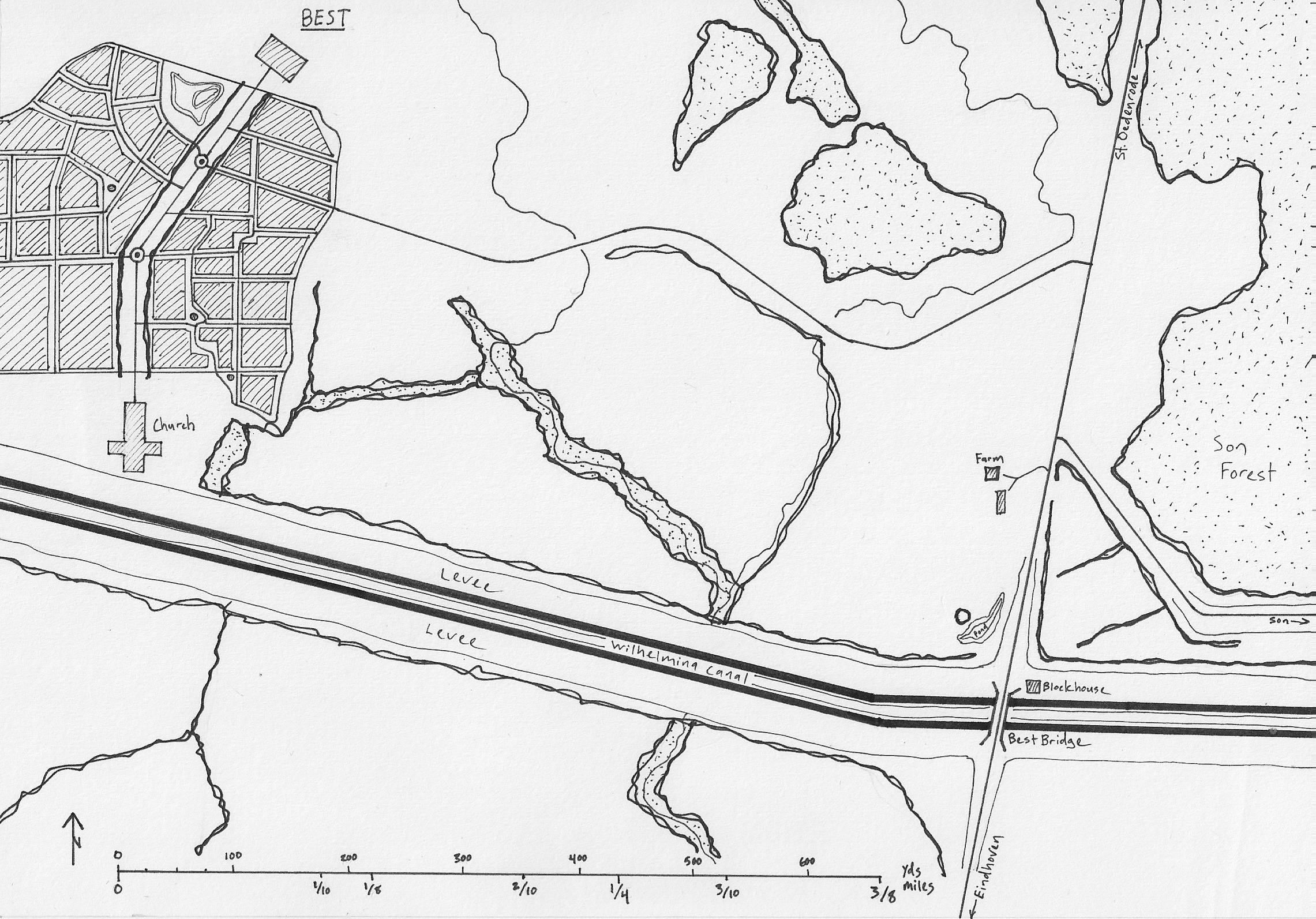
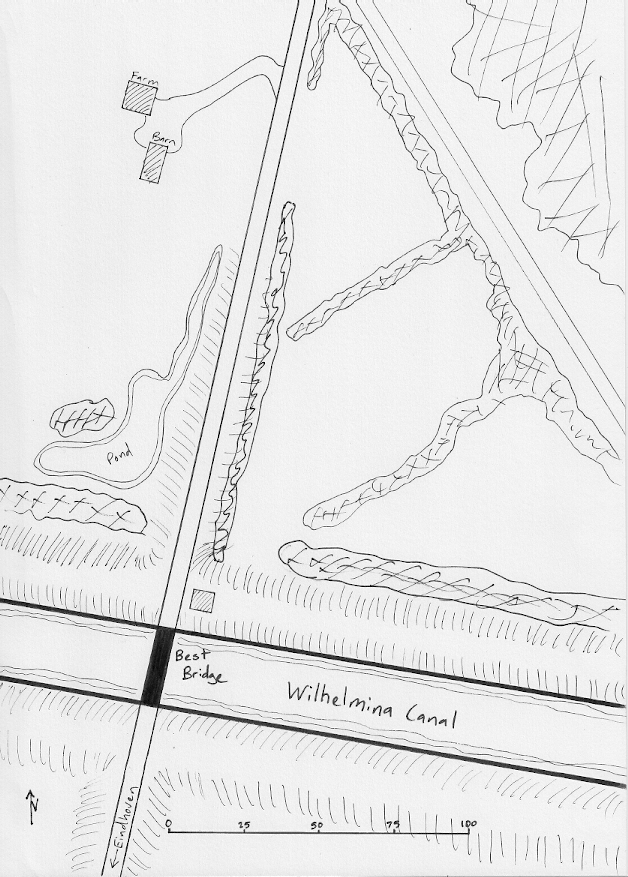
Barnes is convinced that the farmhouse is key to the bridge defense. Recall that previously, M/Sgt. Franklin and Cpl. Amherst destroyed the farmhouse and the nearby barn with the Flak gun they miraculously lived to capture and turn on the enemy. To this end, Barnes orders Smith’s HMG, the captured German LMG, and one other LMG to be redeployed to the farmhouse. The crews hop-to and hump their guns the 200 yds to the farmhouse. Fogarty gets to work organizing logistics

At this point, the boys have zero supply. That means that Smith, with his move heavy weapon that allows him to spend 1-supply to get a heavy weapon for the engagement, has no way to pay for the HMG. Lucky for him that no one’s going to take the weapon from him – the gun alone weighs 84 lbs.; the tripod almost another 45 lbs. – the position is under harassing enemy fire, ammo for the gun is beyond scarce, and there are no vehicles in the immediate area to facilitate transfer. But, the move requires 1-supply, so, unless they can make a different move to get it they can’t use it until they have 1-supply to spend. We’ve already established in the fiction that the supply of.50 BMG ammo is scarce, so the reason they can’t use the HMG right now is because they have no ammo, at present, for the gun and the 1-supply expense represents the distorted value of the HMG ammo. This prompts many, many follow-up moves to get some ammo for the gun.

I broke the downtime into three segments, spanning a period of about three hours. At the end of each time segment, I synched up what the characters were doing and gave them a chance to think out their next moves. During this period, the characters made scrounging moves, petition moves, and others. I asked them lots of questions, offered suggestions, and asked them what they wanted to do. In summary, they collected ammo, sited their weapons, and prepared their defensive position.

 The Inferno

The squad gets their HMG fed with ammo, for now, and fabricates some ammo belts for the Kraut machinegun too. The machineguns are trained toward the hedge 200 yds. away that probably conceals the German attackers. No one can tell whether the enemy is there in force or not because the sun is setting: the sky is red-orange and the earth is jet black – they can’t see a damn thing. Then the shooting starts.

The Germans probe the allied positions with machinegun fire. The Farmhouse, even in its ruined state, is still a salient feature. The Germans have already sited their guns on it. Now they fire on it to see if they provoke a reaction. Incidental fire all around… and again and again as the troops coordinate a response. Smith looks for the muzzle flashes of the quick-firing German machineguns, assessing the situation. His first shot at this was a 7-9 on assess and a 10+ on fight the enemy. He zeroes in on a gun and puts it out of action. In doing so, he and the others that returned fire, alert the enemy to a strong presence in the farmhouse. They begin to shift their assets…

Several other enemy machineguns are in operation; some fire at the farmhouse. More incidental fire is spread around. Now the boys are starting to sweat – stress and, to a lesser extent, wounds are piling up. Again, Smith wants to pinpoint the sources of enemy machinegun fire, so he assesses the situation. This time 10+,  3 questions. He wants to know where three enemy machineguns are, if he can. Sure, I say. I tell Smith that he watches for their fire and boresights their position. Then he pulls out his grease pencil and marks the azimuth and elevation of the enemy guns on his tripod, 1, 2, 3. Then I have him make three fight the enemy rolls, back to back, one for each enemy gun. Every roll was a hit – I think two of them were 10+. We changed the suppress tag so that it just always means that when you use the weapon against the enemy, you suppress them. So, basically, Smith suppresses, pins, and deals harm to all three of the nearby enemy machineguns. He knocks two of them out of action.

Smith is now the biggest target on the battlefield. In recounting this tale to John on Wednesday – by the way, we got together, drank some beers and did some serious revision – John pointed out that this is totally a GM move, so stay tuned! Right, so when you are the biggest target on the battlefield, the enemy will do something about it. I decide to turn Smith’s move back on him. In the Regiment, the enemy are proactive: they take the initiative, same as the players. So, adding consequences to a Player’s actions, even if they hit on a move with a 10+, is not just OK, it’s expected. So the German’s zero-in on Smith’s position, because he’s burning through ammo like crazy. A sniper gets Smith’s silhouette in his sights and pulls the trigger.

Smith takes 3-harm concentrated and goes wounds critical. He’s knocked off the gun and falls to the floor. Barnes rushes over to help. I ask him what he does and Barns says he tries to put pressure on the wounds and he calls out for a medic. I ask him what he looks like from outside the farmhouse. Barnes says, I guess I look like I step behind the gun… The sniper, who already has the range, takes a second shot. Barnes goes down too after taking 3-harm concentrated. Smith calls out for help and Pvt. Jacobs, his trusty loader, tries to answer the call, though there’s not a lot he can do. He just takes the stress and fires blind, moving the traverse and elevation, manipulating the tripod from cover in a vain attempt to fend off the enemy.

A runner is sent out for a medic. Smith and Barnes are gingerly moved down into the root cellar below. The medic returns and I have Smith and Barnes roll +profile for the NPC medic to treat them. They both get 7-9 hits and they spend 1-gear to stabilize. They blow off some steam and recover 1-wound each over a smoke. With Barnes out of action, Amherst is now in charge and he’s not liking it. Command is not his thing and he’s now their ranking officer… as a corporal.

Cutting their Losses

The situation is dire. The HMG is out of ammo, the German LMG is out of ammo, and the Browning LMG is damn near out of ammo. Barnes starts ordering Amherst to abandon the position because it’s hopeless and Amherst resists because he doesn’t want to leave Smith and Barnes behind to die.

Barnes and Smith both want to get out of the root cellar, albeit, for different reasons. Barnes wants to be propped up with the last active LMG and fend off the enemy while the rest of the able-bodied soldiers retreat. Barnes hits on pushing himself, so they drag him up to the gun and he continues to bark orders at them. Smith, on the other hand, wants to get the fuck out of this death trap and get some real medical treatment. When he rolls to push himself, he blows it with a 6 or less. I tell him, when they pick him up, he starts drowning in his own blood and convulses. He takes 1-wound and his handlers set him back down as gently as they can and ultimately abandon him there.

Amherst has a crisis of conscience. This is not something I can retell in any meaningful way. Amherst’s Player was having a crisis of conscience and this is when it started to feel real, as in this is not just a game, but a sympathetic experience. Amherst would not take Barnes’ order to bug out, so Barnes imposed his will. With that move, the PCs have a choice; but, Jerry, Amherst’s consummate player, embraced Barnes’ success and, with a heavy heart, led the ambulatory troops out of the farmhouse, leaving Smith and Barnes to their fate. Amherst and the others relocate to the bridge.

The Last Hurrah!

Barnes’ plan is to provide covering fire using the last belt in the last gun in the farmhouse. So, he pops off rounds here and there in an attempt to fool the enemy into thinking the farmhouse is still fully occupied. Successful or no, the enemy is on the move – heading in their direction.

Smith recognizes, as he stares up at the ceiling of this damn root cellar, that if he stays here, he’s going to die. So he musters his last strength. I call him with a push yourself move, which he succeeds. OK, I say, the first challenge is the stairs; you make it. Barnes is there, propped up with his gun at a hole in the wall that now qualifies as a window. You gonna leave him behind? Yep. Smith wants to crawl the 30 yds. back to the hedge where he’s pretty sure friendly troops are still holding the line. Cool, sounds like you’re pushing yourself, I say. I hear Smith’s character pick up his virtual dice from 2000+ miles away – we’re all in different states (sometimes different countries); but, the tension is no less real. Success! Smith crawls from certain death to friendly lines where he is recovered. You can read his epilogue below.

Barnes runs out of machinegun ammo. He can hear Germans moving in the root cellar below, so he pops a grenade and chucks it down there through one of the many gaping holes in the floor. Blast. He hears screams and groaning below. Then he hears the leaden bounce of an enemy grenade thrown through the window. Barnes says he wants to try to throw the grenade back outside at the attackers. Cool, I say, roll for act under fire. He fails miserably. You grasp around for the grenade but you don’t find it in time. Barnes is already a hair’s breadth from death, so when the grenade detonates, it’s over. The Germans capture the key farmhouse position and Barnes’ player loses his second character in as many sessions.

The Die is Cast

The players have done all that they can, so I zoom out in terms of scope and time and describe the changing tides of battle. I have Amherst roll +profile and use 6 or less as the enemy gains advantage, 7-9 as enemy gain –or– stalemate with a cost, and a 10+ as the friendlies gain advantage. That exposed the need for a new GM move, which we are now working on. Remember, the GM has narrative control over the situation. Sometimes it’s best to exercise this control to dictate the outcome of a battle and sometimes it’s better to leave it to dice.

I decided to have Amherst continue to roll until the situation is completely resolved. The first roll was a 7-9. I have them spend their last supply to continue to fight it out at the bridge. Next roll was a miss, the German attack is a decisive success and they recapture the bridge during the night, driving the paratroopers into Son Forest. I tell Amherst that the next opportunity to recapture the bridge is at first light. Amherst rolls a 7-9 for the counterattack; stalemate.

The Germans’ goal in recapturing the bridge is to destroy it, denying it to their enemy. They had time to wire it with explosives over night and the stalemate in the morning means it is still in their control. I have time and opportunity to advance my agenda without interference, so I make a hard move. The Germans blow Best Bridge.

Conclusions

Historically, the German’s blew both Son and Best bridges before the 101st could capture them, denying a crossing over the Wilhelmina Canal. Conversely, the 101st captured the bridges at St. Oedenrode and Veghel intact. XXX Corps build a pontoon bridge over the Wilhelmina Canal at Son during the night of 18-19 September, arriving in the Nijmegen sector (US 82nd Airborne territory) on the morning of September 19, day 3.

In our version, the same things ultimately happened. The players’ actions had a significant effect on the strategic situation with the capture of Best Bridge intact; but, their actions surrounding the Germans’ night attack changed their unit’s posture from secure to threatened, which led to the dice rolls that sealed their fate. The British paratroopers in Arnhem, expecting XXX to arrive on the morning of September 18, day 2, will now have to wait until at least the evening of September 19, day 3.

The campaign is on-track historically in the Eindhoven Sector, so we conclude our story of the 502nd PIR, 101st Airborne Division and focus now on the British 1st Airborne Division in the Arnhem Sector.

Decorations

Purple Heart

Private First Class Smith is awarded the Purple Heart for life threatening injuries sustained in combat with an armed enemy of the United States near Best, Netherlands on the night of 17-18 September 1944.

Sergeant Barnes is awarded the Purple Heart (posthumously) for fatal injuries sustained in combat with an armed enemy of the United States near Best, Netherlands on the night of 17-18 September 1944.

Lost in the Shuffle

Sgt. Barnes gave his life in a heroic act to save others. But, in the confusion and heavy fighting during the struggle for Best Bridge, Barnes’ story is lost in the severed chain of command. By the end of Operation Market Garden and the near-catastrophe of the Battle of the Bulge, corroborating witnesses are lost in battle or sent home and dispersed. Barnes’ sacrifice, like that of so many other worthy soldiers, goes unsung; but, is not forgotten by those who lived on.

Epilogue

Since we drew this story arc to a close, I asked the players to write epilogues for their characters. This is what they had to say.

Pfc. Smith

Having sustained a collapsed right lung and a broken rib, Smith was constrained to the field medical tent until the arrival of XXX Corps.  After the end of Operation Market Garden, Smith was evacuated to the rear and sent to a field hospital in France for proper treatment.  After having his broken rib reset and his lung re-inflated Smith spent the rest of the war in Britain going through bouts of pneumonia.  Eventually Smith was in good enough condition to make it back to Chicago.  Upon return Smith got married and had 2 kids, returning to his mechanic job.  However, the pneumonia kept returning and his breathing was never right.  He eventually died at the age of 35 succumbing to the illness and injuries that had plagued him for so long.

Cpl. Amherst

Cpl. Amherst showed repeated signs of battle fatigue, eventually coming to the attention of a doctor in his platoon’s field hospital, who rotated him out of combat duty.  He was re-posted to a clerical detail in London.  After the war, he returned to his barbershop in Levittown, Pennsylvania.  He never could forgive himself for abandoning Sergeant Barnes in the farmhouse outside Eindhoven. He turned to drink, and eventually lost his business.  He was last seen after being released from jail in Pittsburgh in 1951, after being arrested for vagrancy.

Sgt. Barnes

Although Sergeant Barnes’ son was too young to remember his father before he went to war, he would always remember the day his mother received notification of his father’s death. Sergeant Barnes’ widow never remarried.

Posted in Actual Play, Role Playing Game, Role Playing Game Design, RPG, The Regiment | 4 Comments

[The Regiment AP] Operation Market Garden (Session 3)

Session 3 – Eindhoven Sector, 101st Airborne Division

Quick re-cap from last session – the characters we’re all banged up; but, they managed to defeat the bridge defenders, culminating in the capture of their battalion objective, Best Bridge, intact. Amherst is awarded the Distinguished Service Cross, Franklin is awarded the Bronze Star Medal with Valor Device, and Franklin and Amherst are both awarded the Purple Heart. The crew digs in at the bridge and prepares for the expected German counterattack.

Housekeeping

John and I are shaping up the next revision of the basic moves. We cut the move count by 20% or so and are still working on refining the ones that are left. I started testing them this week. The most successful of these so far is Fight the Enemy, which replaces Attack the Enemy, Make a Close Assault, and Suppress the Enemy. I include the text of Fight the Enemy below as a preview of things to come.

FIGHT THE ENEMY

When you fight the enemy, spend 1-gear and roll +battle. On a 10+, choose two. On a 7-9, choose one:

  • You hit them hard. Deal your harm, as established. ƒƒ
  • They hit the dirt. GM chooses: they’re suppressed, pinned, or both.ƒƒ
  • You gain the upper hand. GM chooses: their position is compromised, they fall back, they break and run, they surrender.

Day 1 – 17 September 1944 – 1644 hrs.

Bad Omens

Franklin and Amherst are sent off to medical by Captain Lovatt, the battalion XO. They reach medical and get triaged. Franklin, with serious wounds, queues up for treatment while Amherst with his largely superficial wounds gets out-prioritized and is left to his own devices. He chooses to help out by bringing water to the wounded soldiers. I tell them that the field hospital is situated in Son Forest and it consists of a couple of tents with dozens of wounded soldiers propped up against trees outside on the forest floor.

Amherst has some accumulated stress and wants to blow off some steam, so he finds a lucid lieutenant with a minor head wound and a ragged, bloody hole in his boot. They chat for a bit and Amherst learns that the Lt. and his platoon encountered a Flak battery about a quarter mile to the northwest while on patrol and sustained heavy casualties. Amherst shares a nip off his hip flask with the Lt. and hits on his blow off some steam roll, recovering some stress.

Franklin gets patched up; he has only serious wounds left (wounds marked in the right half). I tell him he can stay here at the field hospital and heal 1-wound per day (which would take care of those right boxes) or you can tell them you’re good enough and head out. He chooses to head out and Amherst suggests they go find those guns. They ask the Lt. for his map and to indicate where the guns were last seen. The Lt. shrugs, “Take it. Fat lot of good it’ll do me. I’m not going anywhere; I can see daylight through my boot.”

Franklin and Amherst hoof it over to HQ to find the Major. He’s busy, so Amherst barges in, interrupts the Major’s heated discussion with his intelligence officer to announce that he and Franklin recommend they go after those reported Flak guns. The Major gives his intelligence officer an angry look when Amherst blurts out that the presence of the guns had been reported; but, was ignored by HQ. They get the green light to go searching for them.

Meanwhile, Smith gets his shiny new heavy machinegun set up across the road from the blockhouse, pointing west toward the expected enemy avenue of advance. He and his gun crew, which includes his loader, Pfc. Jacobs, Pfc. Turner, and the BAR gunner, Pvt. Adams, dig a shallow slit trench. Smith still has way too many stress boxes checked for comfort, even after I give everyone the standard recover 1-stress or 1-wounds at the start of the session. So, I offered Smith the choice of blow of some steam, dig in, or get some shut-eye. He chose to blow off steam. I would have dug in, and Smith later wished he did too. He hit on a 7-9 and recovered 1-stress.

Smith’s game of cards with his MG team wrapped up around 1700 hrs, when a massive explosion several miles to the east rocked them to attention. Son Bridge is blown. That means Best Bridge, the alternate route, is now the primary route. Smith asks, “XXX Corps has bridging equipment, right?” Yep, but it takes 14-18 hours to assemble a Bailey Bridge, so that’s what holding this bridge intact is worth to the British up in Arnhem. For lightly equipped paratroopers, that’s a big deal.

Parry and Riposte

Shortly after the explosion, Smith and his crew make out movement in the trees and hedgerow about 200 yds west of their position. Smith wants to nip this in the bud, so he chambers a round and starts shooting. I tell him that they are well-concealed in the foliage, so at best he can do incidental fire. Smith wants to suppress them, so he’s not too concerned. He spends 2-gear, one for fight the enemy and one for the heavy weapon (ordnance tag), then hits with a 7-9. He suppresses them. Then he assesses the situation. He wants to pinpoint them, so he stops shooting and studies the enemy muzzle flashes. He locates them and kicks ma deuce into action. On a 10+, he pins them and he gains the upper hand. Shot up and pinned, a half-dozen Germans surrender. Smith stops firing at them; some of the Germans scramble back through the woods toward Best.

Franklin and Amherst show up just after the shooting dies down and check in with Papa Bear. They all now believe a German attack is likely to occur around sunset or after dark. They are concerned that the bridge defense is woefully inadequate, so they abandon their original plan to search for the Flak guns to the north and they hatch a new plan: Smith provides overwatch with the HMG, Papa Bear heads over to HQ with the prisoners and gets the weapons company assigned to bridge defense, and Franklin and Amherst scout to the west of the bridge.

Amherst leads the way, tracking through the brush on the north side of the levee. He gets a 7-9 on his infiltration move: alert level raised. They sneak to within 200 yds of the church and they can hear the Germans assembling troops and weapons along the southwest corner of Best. Amherst asks if, retroactively, they could have worked out a flare signal to indicate danger immanent – no problem – costs 1-gear for the flare!

Franklin and Amherst decide that they’ve seen enough to report back, so they low crawl north through the tall grass to the treed defile that runs east, between the levee and the road. That’s how the Germans that Smith encountered earlier must have infiltrated. Amherst takes the lead on the engagement move and blows it: detected and hunted.

A German scout team ambushes them with submachine guns and hand grenades – 4-harm direct. Franklin takes 5-wounds. That puts him at 7-wounds total. He’s a goner. I tell Franklin that checking the gray circle means the war’s over for you. It probably means death; but, it doesn’t have to. I tell Franklin that he gets to narrate. Since Amherst took mostly stress from the grenade attack, Franklin says that he jumps on the grenade to save Amherst’s life. Franklin is killed in action.

Amherst gets the wind knocked out of him by the grenade blast, so I have him roll lost in the fog of war. He hits with a 13 – OK, so you shrug it off like a champ! Amherst gets his bearings and comes face to face with two SMG-wielding German scouts, guns pointed at him. He asks what his options are. I tell him, surrender or trade harm. He makes a third option, going are you crazy all over their shit; he shoots a flare at them! They dive out of the way and, as Amherst runs off into the trees, he dumps a full mag into the German rifleman who was covering the other two.

Amherst wants to bug out, so he makes the infiltrate (well, exfiltrate) move and gets a 7-9. It’s not a clean break; but, they aren’t close on his trail either. Amherst sneaks away toward friendly lines slowly and carefully. He assesses the situation and asks if he can see or hear the enemy. I tell him he can hear them blundering through the brush – amateurs. I also tell him that they will overtake him if he continues at his current pace. Amherst doesn’t want to speed up and risk detection, so he lays in wait. 10+ on the Ambush engagement move! The Germans walk past him in close file and Amherst returns the favor, chucking a grenade at their feet. It’s 4-harm. They die. Amherst kicks one of them as he walks past.

Smith spots movement in the trees. He isn’t aware that Amherst and Franklin are out there, so he expects Germans. Amherst’s player has an oh-shit moment and jumps right into the bargaining stage of grief. I tell Smith he better assess the situation. I have him trained well: he says he doesn’t know if it’s friend or foe and that’s the crux of the problem – an unanswerable question at this moment. I tell him he can always wait until he has visual confirmation; but, if this is a German attack, that might mean taking fire. Perhaps a better question would be, “What is the perceived severity of the threat?” Smith goes with that and I tell him, “Very low.” Smith holds fire while Amherst runs out of the trees Platoon-style (except nobody’s following him). He crosses the field and makes it across friendly lines. Still in a near-panic state, he asks where he can find Papa Bear – he’s got to warn HQ that the Germans are ready to launch a serious counterattack. Papa Bear is at HQ trying to get reinforcements, so Amherst runs there, taking Pfc. Turner with him – just in case the Germans get him – to get the message through.

The Eye of the Storm

Again, Smith has some down time. Amherst and Franklin spent a good-while scouting around, so I pose the same question to Smith as before: blow off steam, dig in, or shut-eye? Still dissatisfied with the number of checked stress boxes on his sheet, Smith again chooses to blow off steam. He misses the roll, so I ask him what he did and why it didn’t work. Smith tried to get some sleep; but, he was just too amped up to relax. With blow off steam, on a missed roll, nothing bad happens; but, nothing terribly good happens either.

Amherst runs into the battalion CP, still covered in a chunky veneer of Franklin. Out of breath and spewing out words a thousand miles an hour, he gets the gist of the situation across. Maj. Chilton doesn’t waste any more time trying to decipher the message. He gets those weapons on the move to the bridge. Amherst runs out back and loses his lunch, then walks back to the blockhouse. I tell him to recover 1-stress for getting that off (and out of) his chest. Papa Bear cuts him some slack and let’s Amherst collect himself in the blockhouse, under the cover of a stout roof and stone walls.

Franklin’s player now takes over Sgt. Barnes, the squad leader who reports to Papa Bear. Character death is a very real prospect in the Regiment. We are all pretty surprised that Amherst hasn’t died several times already; but, that’s how the dice roll. I recount the story of them charging the Flak gun – they made over half a dozen (at least mostly) successful moves in a row – had they failed almost any one of them, it would have resulted in them being killed. Franklin’s luck ran out. That’s how it goes. Barnes asks if he gets all of Franklin’s XP – sorry pal, gotta start over. In the Regiment, you can play as many characters as you want, whenever you want to – no XP required – so when one of your characters bites it, it’s back to square one. They can start a new character from scratch or take over an NPC. If they want to take over an NPC, they need to check with the GM first. I tell Barnes that I try to make as many memorable NPCs as I can, in part, so they have someone to take over who’s already established in the fiction, if they need to. Take this with a grain of salt. There aren’t any hard and fast rules about what to do when a player character dies, so you can follow my lead or work out some other arrangement with your gaming group. Character death can be a difficult moment for a gaming group, so it’s best if you handle it in a way that works for you.

All Hell Breaks Loose

The weapons company reinforces the bridge with a machinegun platoon and a mortar platoon. They get sited; but, have no time to dig in before the German artillery barrage begins. A trio of 7.5 cm infantry guns, operating from Best, walks a trail of fire along the raised roadbed just north of the canal. The barrage lasts for only a minute or two, as the German’s artillery ammunition supply is terribly short. The intended effect is to screen the advancing infantry, sow confusion, and to cause casualties – in that order.

The new arrivals, the machine gunners and the mortar crews, are out in the open and are hit hard. Smith is hit in his trench along with his crew. The gun deals 6-harm, their indirect fire gives Smith +concealment, and the slit trench gives Smith 1-cover. The net result is 5-harm indirect. Now Smith wishes he spent more time digging! He goes stress-critical from the harm. I tell him it’s a damn near miss and he’s lost in the fog of war. Smith blows the roll. He suggests that maybe he’s temporarily blinded – sounds good to me! Smith fumbles around in the dirt while artillery shots fall all around him.

Fire rolls over the blockhouse where Amherst, Barnes, Turner, and Papa Bear are hunkered down. Same harm, same concealment; but, they’re in a stout, stone building – that’s 3-cover. They take 3-harm incidental. Amherst goes stress-critical. He’s had a rough day. Papa Bear is curled up into his helmet, so Sgt. Barnes (Franklin’s new character) steps up and tells them all to ball up. He succeeds in rallying them and crushes his role, Amherst clears his critical condition and they all recover 1-stress. Barnes walks outside as the barrage rolls over and ceases, like a total badass. I sling incidental fire his way and he doesn’t blink.

Barnes finds Smith fumbling around and rallies him. Smith crawls back into his foxhole, next to a shell shocked Jacobs and the sludgy, bottom half of Adams. He scrapes the dirt out of his eyes and gets his gun ready. Smith catches brief glimpses of Germans rushing their position and begins firing.

Barnes trots across the bridge toward the south side, where one of the weapons company’s machineguns is stationed. He wants to reposition them on the north side of the bridge, where the enemy artillery has made a real mess of things. They are content to sit in their foxhole, which happens to be the same captured machinegun position that Franklin, Amherst, and Smith first encountered earlier that day. Barnes talks them into it and they follow him across the bridge.

Meanwhile, Smith sends Turner back to the blockhouse for more ammo. Turner starts dragging a crate of ammo back and Amherst lends a hand. Everyone who’s moving about out there is now taking incidental fire; Amherst is no exception. He takes 2-harm and goes wounds-critical. Shot through the leg. He initiates the new move “cry for help,” and Turner makes the move, rolling his bond with Amherst. 10+! Turner staunches the bleeding and wraps Amherst’s leg as best he can – clearing Amherst’s critical condition. Amherst helps Turner get the ammo to Smith, who gets his gun back in action, and then Amherst limps off toward the mortar team to try to organize a return fire.

Amherst finds the mortar teams reorganizing from three mortars to two. They have several casualties and are short handed. Amherst tells them where to shoot and scrambles back up to the embankment to observe and direct fires.

Smith makes himself the biggest target on the battlefield by suppressing the advancing Germans with his  .50 caliber machinegun. To his surprise, a 2 cm Flak gun the Germans have moved up under the cover of the barrage, opens up on his position at a range of 200 yards, suppressing Smith and his crew. Another 4-harm, luckily, incidental – the smoke and dirt haven’t yet cleared the air. He lucks out on the harm roll and takes a wound – it’s the stress that’s been eating him away – so it’s actually a welcome relief.

Amherst makes his doped scope roll for the mortar team and gets a 10+. He dopes their scope (counteracting the -1-ongoing they have for firing close) and he spots the splash, so they take +1 forward to follow-up shots. Amherst rolls for the mortar team using the unit profile. The first shot is a 7-9, so he suppresses them. The second shot is a 10+: they inflict harm and turn the tide of battle. The 2 cm Flak gun is destroyed, much to Smith’s relief, and the infantry retreat en masse along a 100 yard front. Unfortunately, the mortar teams, like their German artillery counterparts, are short on ammo and have run out. Smith walks fire along the hedge along their right flank and turns the next 100 yards of their line into a rout with a successful fight the enemy move.

Some Germans remain to the north and are still in a good position to counterattack. That’s where we cut for the session.

Decorations

Combat Infantryman Badge

It appears that I got this one wrong last time. The CIB should be awarded for being personally present in armed combat with the enemy. Since all of the characters were veterans prior to this jump, they all no doubt already have this award. If not, they have it now.

Purple Heart with Oak Leaf Clusters

Corporal Amherst is awarded the Purple Heart with Oak Leaf Clusters for injuries sustained in combat with an armed enemy of the United States near Best, Netherlands on 17 September 1944.

Master Sergeant Franklin is awarded the Purple Heart with Oak Leaf Clusters (posthumously) for fatal injuries sustained in combat with an armed enemy of the United States near Best, Netherlands on 17 September 1944.

Note: Oak leaf clusters are used for a number of medals and other awards to signify multiple decorations.

Bronze Star Medal with Oak Leaf Clusters and Valor Device

The President of the United States of America takes pride in presenting the Bronze Star Medal with Oak Leaf Clusters and Combat “V” (posthumously) to Master Sergeant Franklin, United States Army, 101st Airborne Division for valorous and meritorious actions while engaged in direct combat operations in support of Operation Market Garden. On 17 September 1944, near Best, Netherlands, M/Sgt. Franklin, after receiving medical treatment for wounds already received in battle, volunteered for a reconnaissance into enemy held territory. While returning to friendly positions carrying intelligence vital to the security of the sector’s defense, M/Sgt. Franklin and his spotter were ambushed by an enemy patrol. The enemy engaged M/Sgt. Franklin and his spotter with a grenade and M/Sgt. Franklin dove onto the grenade, shielding its lethal effects from his spotter. M/Sgt. Franklin was killed instantly. M/Sgt. Franklin’s courage and personal sacrifice allowed his spotter to return with the collected intelligence to friendly lines, which was used to organize an effective defense of the area against a determined enemy assault.

Resources – Sunrise and Sunset

There was some question as to when sunset would be and when darkness would fall. The enemy is to the west and that’s where the sun sets and those would be likely times for an enemy attack. Yes, we track time. Yes, we track the sun and the weather, because it matters to us. For God’s sake, don’t be as huge a nerd as we are (but if you want to, see below).

So, as I am “Paul 1,” the other Paul in our gaming group is “Paul 2.” When the question of when sunset would occur came up, I pulled “1900 hrs or so” out of thin air and most of us were happy to go with it. But not Paul 2, no, that man has real integrity (but mostly it’s because he’s an astrophysicist); he went to the Navy’s website and dialed the clock back to 17 September 1944! This is what he posted on our virtual game table:

The following information is provided for Best (longitude E5.4, latitude N51.5):

Sunday, 17 September 1944 Universal Time + 1h

 SUN

Begin civil twilight            05:42                

Sunrise                                 06:16                

Sun transit                          12:33                

Sunset                                  18:49                

End civil twilight                19:22                


MOON

Moonset                              18:55 on preceding day

Moonrise                             05:49                

Moon transit                     12:38                

Moonset                              19:15                

Moonrise                             06:54 on following day

New Moon on 17 September 1944 at 13:37 (Universal Time + 1h).

If you want this kind of anal-retentive detail in your own game, thank Paul 2 and check out the US Naval Observatory website, here: http://aa.usno.navy.mil/data/ The UI is straight out of the 90’s, so you’ll have to figure it out.

Posted in Actual Play, Role Playing Game, Role Playing Game Design, RPG, The Regiment | 3 Comments

[The Regiment AP] Operation Market Garden (Session 2)

Session 2 – Eindhoven Sector, 101st Airborne Division

Quick re-cap from last session – the characters jump out of a perfectly bad airplane several miles south of their landing zone. They re-group and head north to their primary objective: the capture of Best Bridge. So far, they seem to have succeeded; however, Pfc. Smith, the machine gunner, and M/Sgt. Franklin, the sniper, are critical from stress and wounds, respectively.


Day 1 – 17 September 1944 – 1554 hrs.

Breathing Room

When we left off last session, the boys had just captured Best Bridge and Both M/Sgt. Franklin, the sniper, and Pfc. Smith, the machine gunner, were critical – Franklin from wounds and smith from stress. Cpl. Amherst, the commando (also Franklin’s spotter), was a little worse for the wear; but, otherwise fine.


I like to have my players recover 1-stress or 1-wound at the beginning of each session, gratis. That’s not a rule; but, I think it’s a good thing to do. It gives them some breathing room. In the Regiment, the health bars for wounds and stress are split in half. Health boxes on the left represent superficial trauma while boxes on the right represent serious trauma. When you “recover,” you eliminate superficial trauma – by erasing one wound/stress from the boxes on the left. When you “heal,” you can eliminate either superficial or serious trauma – by erasing any one wound/stress box (i.e. from the left or right side). Whenever you mark a box on the right, you’re critical, which means that pushing yourself is generally required to take any significant action – GM decides when that is.


Licking Their Wounds

Franklin spends his advance to get the medic move and asks if he can treat his own wounds and his critical condition. I tell him that he can’t do it by himself; but, he can talk Amherst through it. They clear out some space in the blockhouse and Frankiln walks Amherst through the bandaging process. Since Franklin is the one who will ultimately make the move, I have Amherst make the helping move. He hits on a 10+! I tell Franklin to go ahead and make the medic move; but, I tell him he doesn’t get the +1 forward from Amherst’s help – I tell him that without Amherst’s successful move, he wouldn’t get to make his at all. He gets the 7-9 result and clears the critical condition.


Meanwhile, on the south side of the canal, Pfc. Smith and Pvt. Jacobs, the loader, are having a smoke. Smith and Jacobs had endured harrowing fire from the enemy HMG in the farmhouse to the north. I tell Smith that he can make the blow of some steam move for both himself and for Jacobs if he spends an extra 1-smoke. Basically, if he shares his pack of cigarettes with Jacobs, they can both relax a little. Smith does and he succeeds at blowing off steam. Smith heals some stress and I tell him that both he and Jacobs clear their critical conditions. The move blow off some steam doesn’t allow the player to clear a condition, which means it’s not a way for the player to clear their own conditions; however, as a GM, it is my job to clear conditions when the fictional circumstances that caused the condition are no longer present, applicable, or relevant. That get’s Smith and Jacobs back into the fight. They hustle across the bridge and link up with Franklin and Amherst.


Help is on the Way!

6 of the original 8 soldiers in their stick are still alive – the aforementioned plus Adams, the BAR gunner, and Turner, the soldier we last saw cutting through a rat’s nest of wires leading to a control panel in the blockhouse. Since the enemy fire has died down in their sector and some time has clearly passed, I take the opportunity to send some reinforcements their way. I decided it made sense in the context of the larger battle and it would also further my narrative agenda.


A rifle squad, lead by platoon leader S/Sgt. “Papa Bear” Jones, augmented with an engineering team approaches the bridge along the defiladed south side of the northern levee embankment. Long story short, I introduce Papa Bear and make him seem human by describing him, enmeshing them in their affairs, taking over leadership of their squad, and I give them a chance to bond with him.


Charging into the Teeth of the Enemy

Papa Bear orders a recon to the immediate west of the blockhouse position. As the road and levee-canal divide the terrain into quadrants, the NW quadrant has not yet been scouted by friendly troops. Sgt. Barnes and some of the fresh NPCs are tasked while M/Sgt. Franklin and Cpl. Amherst, the scout-sniper duo, volunteer. Pfc. Smith and Pvt. Jacobs get the captured machinegun in the blockhouse back into action.


Franklin and Amherst take the lead on the recon engagement move, Amherst’s on point – 10+! The sniper team sneaks down the north face of the levee through the brush to a position immediately south of the pond. They discover a Flak gun concealed in a thicket just to the north of the pond at close range. Franklin studies his targets and Amherst calls the shots. The +1 ongoing from doping the scope counteracts the -1 ongoing from Franklin using his battle rifle at close range. I ask Franklin who’s first. He replies, “Whoever looks the most important.” I interpret that to mean the leader. I tell him, the gun is pointed at the crossroads, which is not exactly in your direction; but, it’s close. There’s a Luftwaffe NCO with a submachine gun crouching in front of the gun, keeping a lookout. The gun is partially concealed in the brush in what appears to be a sandbagged position. Franklin takes the shot. Dead. He follows up with “the next most important-looking enemy” – again, I interpret that as highest rank and a corporal bites the dust. I maliciously leave the gunner to his work. 


At this point, the gun crew is taking action: I tell them that the barrel of the 3.7 cm Flak gun has traversed to their azimuth and the gunner is dropping the elevation for the kill. Now, this is an ugly position for them. The Flak gun is an auto-cannon that hurls 1.5 pound, high-explosive fragmentary shells at Mach 2.5. A direct hit is obliteration. I ask them what they do. Amherst decides to press the attack and considers is options: attack the enemy, make a close assault, or suppress the enemy. Only make a close assault has the desired effect: which is to get the gun crew to surrender before blasting them to bits. Amherst has the commando move cold operator, so he never has to push himself to commit up close and personal acts of violence.


So Amherst, SMG a-blazing, charges the Flak gun as the barrel levels with him. He rolls a 7-9… I walk through each of the options: “they won’t fall back because there’s nothing but a hundred yards of open ground behind them and if they run for it, they’ll surely die; they can’t barricade themselves in because there’s nothing solid between you and them; so that just leaves trade harm for harm.” Amherst: shit. Back to Franklin – he takes one more shot while Amherst charges the enemy. This time he chooses the gunner! The gun will fire, because it’s been decided by Amherst’s move and there are still plenty of crew left to do it. Franklin’s move decided that the gunner is killed, so I decide that that merits lessening the blow: instead of concentrated fire, Amherst takes 4-harm direct and instead of direct fire, Franklin takes 4-harm incidental. Amherst spends 1-gear for spray and mows the rest of the gun crew down, as the shells explode around him.


Amherst goes critical from wounds. I finally remember to tell someone to make the when you see someone close to you go down in battle move! Franklin hits on a 10+, meaning he either has to rush to help Amherst or take 2-stress. Franklin chooses to help and makes the medic move, also with a 10+, and chooses to both clear Amherst’s condition and to recover 1-wound.


Fast-forwarding a bit, Franklin and Amherst turn the Flak gun around on the farmhouse and barn, which are still occupied by the enemy; Smith provides suppressive fire from the blockhouse. The farm and barn are both completely destroyed; but, not before the enemy sniper takes a crack at Amherst. Back at the bridge, the engineers have safed the explosives and Turner gets an atta boy from Papa Bear and the rest of the squad for cutting the cables that would have allowed the enemy to blow the bridge. Franklin and Amherst report back to battalion HQ with Papa Bear and are tasked to track down that sniper. Papa Bear requisitions a heavy machinegun for Smith (who spent 1-supply to make the heavy weapons move). Smith and Jacobs dig in while Franklin and Amherst search for the sniper.


Hunting the Hunter

With the farmhouse threat neutralized, the battalion begins to consolidate their position. Franklin and Amherst take cover in brush on the east side of the Eindhoven-St. Oedenrode highway, just north of the farmhouse. Amherst sets up his spotter scope and begins to search for telltale signs of the enemy sniper. He hits on a 10+ for assess the situation: three questions. The obvious question would be “where is he?” The thing is you have to have a way of knowing the answer to the question. The enemy’s whereabouts are unknown, so Amherst needs to ask questions he can answer.


First, Amherst asks if he can see any disturbances in the grass where the sniper might have passed. I answer yes and draw a couple of lines on the map to show the visible disturbances. They indicate that the sniper may have been heading northwest. Next, Amherst asks if the sniper would be able to link up with friendly units if he continued in that direction. Yes indeed. Based on the path the sniper appears to have been taken and what Amherst knows about the general tactical situation, it’s a reasonable to assume that sniper could link up with friendlies if he and Franklin don’t intervene. Amherst struggled with what to ask for the third question, so I suggested that he ask where he would go if he were in the enemy’s shoes. Since that is something that Amherst can answer, whether or not it’s actually enemy’s position, it’s a legit question. So he asks and I tell him where he thinks the sniper would be.


Based on what they know, they decide to follow their hunch and they make the patrol engagement move. They hit with a 10+, ambush! So, by virtue of the successful engagement move, their hunch was right. I tell them that they get their scopes trained on the treeline where they expect the sniper to be and, sure enough, they spot him crawling across the field toward safety. Franklin lines up the kill shot and hits with a 10+ on one shot one kill. Franklin puts a bullet into the sniper’s head at 200 yards and then he and Amherst slink out of sight and return to the bridge. Meanwhile, Smith, Jacobs, and Sgt. Barnes’ team have dug in their HMG, pointing it west toward the expected enemy counterattack.


That’s where we left it.


Decorations

Now that the squad has linked up with their battalion and they’ve had a chance to recount their story to the battalion commander, it’s time to honor their service.


If you’re like me and you’ve never served, then figuring out what decorations to award and when, is confusing. My approach is to read up on the decorations themselves (Wikipedia actually has pretty lucid descriptions) and then I search the Internet for citations for the awards. At www.militarytimes.com, you can find numerous citations for a number of different kinds of decorations, including the Medal of Honor, Distinguished Service Cross, Distinguished Service Medal, Silver Star, and Bronze Star. Each citation tells the story of the service man or woman who earned it. In addition to gaining an appreciation for their service and sacrifice, you can better understand both what it takes to earn one of these decorations and how to write it up, which I highly recommend you do.


Purple Hearts

M/Sgt. Franklin and Cpl. Amherst are awarded the Purple Heart for injuries sustained in combat with an armed enemy of the United States near Best, Netherlands on 17 September 1944.


My rule of thumb for the Purple Heart is award it when a character goes critical from wounds (one or more times) during a given session.


Combat Infantryman Badge

The 101st Airborne Division takes great pride in awarding Private First Class Smith, United States Army the Combat Infantryman Badge for professional, soldierly conduct near Best, Netherlands on 17 September 1944. While under heavy fire from an enemy machinegun, Pfc. Smith maintained steady, suppressive counter-fire, which allowed his squad to maneuver into position to eliminate the enemy machinegun. Pfc. Smith captured the enemy machinegun position and provided covering fire for his squad, again under heavy machinegun fire, while they maneuvered to capture the bridge, the battalion objective.


Bronze Star Medal with Valor Device

The President of the United States of America takes pride in presenting the Bronze Star Medal with Combat “V” to Master Sergeant Franklin, United States Army, 101st Airborne Division for valorous and meritorious actions while engaged in direct combat operations in support of Operation Market Garden. On 17 September 1944, near Best, Netherlands, M/Sgt. Franklin, after sustaining serious injury in the capture of Best Bridge, volunteered for a patrol in which he encountered an enemy anti-aircraft gun at point blank range. M/Sgt. Franklin engaged the enemy gun crew with effective, aimed fires from his rifle. M/Sgt. Franklin held firm in the face of fire from the enemy gun and rushed to the aid of an injured soldier, applying first aid to treat the soldier’s injuries. M/Sgt. then brought the captured gun into action against the enemy, destroying occupied enemy positions.


Distinguished Service Cross

The President of the United States of America, authorized by Act of Congress July 9, 1918, takes pleasure in presenting the Distinguished Service Cross to Corporal Amherst for gallantry and intrepidity above and beyond the call of duty while serving as a spotter in the 502nd PIR, 101st Airborne Division. While advancing on the battalion objective, the bridge near Best, Netherlands, Cpl. Amherst charged an enemy machinegun nest while under fire, destroying it with hand grenades. Cpl. Amherst then took charge of his squad after his sergeant was wounded in action, then he ran across the bridge under withering fire to silence a second machinegun position concealed in a blockhouse, taking several prisoners. Once the enemy position was secured, Cpl. Amherst ran back across the bridge to retrieve his wounded sergeant and carried him across the bridge, in full view of the enemy, to the captured blockhouse, where he provided medical treatment. Cpl. Amherst then volunteered for a patrol in which he encountered an enemy anti-aircraft gun at point blank range. Cpl. Amherst charged the enemy gun crew with his submachine gun while under heavy fire from the enemy, killing the enemy gun crew. Cpl. Amherst was seriously wounded in action; but, despite these wounds, he serviced the captured anti-aircraft gun, which was used to destroy occupied enemy positions.

Posted in Actual Play, Role Playing Game, Role Playing Game Design, RPG, The Regiment | 2 Comments

[The Regiment AP] Operation Market Garden (Session 1)

Session 1 – Eindhoven Sector, 101st Airborne Division


My Thursday group wrapped up a game of the Regiment and we were itching for more, so I tossed the idea of A Bridge Too Far into the ring and got the group’s buy-in. The Regiment is definitely still in play test mode, so we’re constantly finding and fixing bugs.

The characters are part of the 1st Bn, 502nd PIR, 101st Airborne Division who are to jump into the Eindhoven Sector (southern Netherlands) just north of Son Forest. 1st Bn’s primary objective is to capture and hold Best bridge until British XXX Corps arrives. British XXX Corps has the objective of traversing the 90+ miles and more than half a dozen major waterways between Eindhoven and the final objective: relief of the British 1st Airborne Division in Arnhem.

I want this game to play out like the movie A Bridge Too Far, where we see the campaign from several different viewpoints and the impact one group has on the campaign is then later experienced by the groups on down the line. It’s a lofty goal; but, hell – life’s short.

Wanna Check out this Game?

Visit our creation on the Apocalypse World forum, here: http://apocalypse-world.com/forums/index.php?board=35.0

The Cast of (Player) Characters

M/Sgt. Franklin [Sniper] – Drafted farmer from Delaware, male, battered uniform, scarred face, sturdy body. Weapon: M1C Garand (scoped)

Cpl. Amherst [Commando] – Drafted barber from Pennsylvania, male, worn uniform, striking face, blank eyes, sturdy body. Weapon: Sten SMG (silenced)

Pfc. Smith [Soldier] – Drafted mechanic from Chicago, male, worn uniform, weathered face, wild eyes, sturdy build. Weapon: M1919A6 LMG.

Day 1 – 17 September 1944 – 1400 hrs.

The Jump

The allied airborne armada passes over Eindhoven heading north to the drop zones along the Eindhoven-Arnhem corridor. The 502nd Parachute Infantry Regiment (PIR), the players’ unit, has the airborne special training move. M/Sgt. Franklin, the stick leader and first trooper out of the plane makes the landing engagement move and blows it, rolling a 6. I choose a loose interpretation of “pinned” – “Your Dakota lurches with a violent shudder. The nose of the aircraft pitches up for a moment then slowly rotates nose-down. The jump sergeant yells, ‘Jump now – go, go, go!’” M/Sgt. Franklin takes a quick look around. With his trained sniper instincts he quickly gets his bearings: they are jumping several miles south of their LZ. Then, he jumps out of the plane.

I give the guy standing in the doorway a freebee for jumping out of the not so perfectly good airplane. I ask the other players, “So, Franklin is the first out of the airplane, which of you is the last?” Pfc. Smith steps up to the plate and says that, since he’s carrying the machinegun, it’s probably him. No objections there. I take the opportunity to introduce Pfc. Smith’s loader, Pvt. Jacobs, a slight, mousy, teen who’s on his first combat jump.

The pinned situation is this: Jacobs and Smith are the last troopers in the Dakota and, by now, the aircraft is descending quickly; Jacobs is wild-eyed and panicking, screaming we’re going to die! As long as Jacobs is cowering, Smith has no way to get out of the plane – so he’s pinned. The condition can apply to anyone or everyone. I ask Smith, so what do you do? Smith grabs Jacobs by the collar, yells at him to get his ass moving, and then pushes him out of the Dakota and throws himself out too. I give Smith 2-harm incidental for the near death experience and, since Jacobs is compliant and Smith is a tower of a man, I let Smith throw Jacobs out of the plane without making a move – rally or impose your will could have been good choices. In retrospect, I should have made Smith act under fire; but, I really didn’t want to chance a miss and kill a PC on the jump, I just wanted to screw with them. Since I can always decide what the consequence of a miss is, I should have made Smith roll.

The stick jumps somewhere short of their objective; I give them all 1-harm incidental for hitting the ground.

Regrouping

Since Pfc. Smith was the last out of the plane (and closest to the ground), he’s the first one to land and take action, so I put him on point for the next engagement – tracking down the rest of the stick. He asks, “Where the hell am I?” Good question: you just narrowly avoided death – the Dakota and its aircrew are now a smoking ruin – you can see the plume billowing skyward about a half-mile northwest of you.” I tell Smith that he is pretty sure they were hit over Eindhoven – several miles south of their drop zone – and he can see the chutes of the rest of his stick descending to the southeast.

This was a set-up for assessing the situation and Smith could have pushed for the move more; but, the question I essentially posed to him, without actually questioning Smith’s state of mind, was, “did your character really have the presence of mind to get his bearings while jumping at the last second?” Smith said, “I guess I have no idea where I am?” so that’s where we left it.

When assessing the situation, the character needs to have an opportunity in the fiction to find the answer to whatever question is asked. In this case, I thought of several ways in which Smith could have answered that question; but, I challenged the obvious one, which was, “I looked around and saw where we were when I jumped out of the plane,” and left it to the player to decide if his character figured it out some other way. Smith’s player decided no.

Long story short, they re-grouped, figured out where they were (more or less), and set their course toward Best Bridge (their objective) albeit, from the wrong direction.

Approaching the Objective
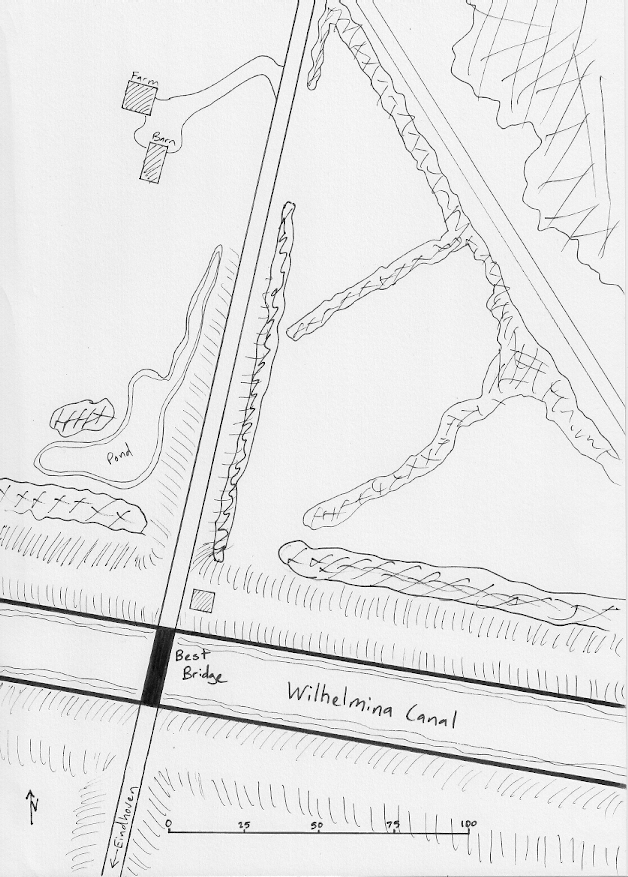
After regrouping, Cpl. Amherst, M/Sgt. Frankln’s spotter, takes the lead and navigates the stick toward Best Bridge, approaching from the south. Their goal is to get there undetected, so I tell Amherst to make the infiltration engagement move. He hits with an 8 – alert level raised. The consequence was easy: the bridge defenders are on alert because of the huge airlift going on right overhead and they’ve deployed sentries.

I tell Amherst that he sees a pair of Germans patrolling along the south bank of the levee, about 200 yds away from his vantage point, a low hedge. Amherst sets up his spotting scope and Franklin dials-in his rifle scope. Franklin takes the shot with the one, shot one kill move. He hits on a 7-9, which has some ugly side effects. Since he chose the advanced marksmanship move, which allows him to add the quick tag at near or far range (certainly applicable here), I defer the consequences until after his follow-up shot. It’s really important to be aware of any special abilities that your characters have and to give them the advantage whenever possible: as GM, you don’t have to make an effort to screw them – just give them some dice and an opportunity to screw themselves and watch the train wreck slowly unfold.

Franklin takes down both of the sentries; but, the stick is now suppressed under machinegun fire from a concealed position. That takes care of the “pinpointed” consequence of Franklin’s 7-9 and sets me up for future hard moves. They all wince at the 3-harm incidental – the first of many combat harm rolls.

Clearing the Machinegun Nest

At this point, they have no idea what lies to the north of the bridge/canal. They can only observe machinegun fire from a concealed position in the brush atop the south bank of the levee, west of the road. Pfc. Smith and Pvt. Jacobs get their machinegun setup and return fire on the enemy. M/Sgt. Franklin and Cpl. Amherst hatch a quick plan to flank the enemy machinegun nest and then assault it. I should have had them roll for make a battle plan; but, I seem to always forget that move.

I tell them that if they take the most direct route, then Smith will have to stop firing for a few moments while they dash under his gun. They decide that’s a dumb idea and counter with a plan to take an L-shaped route to allow Smith to continue firing on the enemy uninterrupted. Great! Smith gets to shooting and nails his suppress the enemy roll with a 10+; he suppresses and pins them.

At this point, Smith is 1-gear into it. I tell him that if he wants to continue to pin the enemy while the rest of the squad maneuvers into position for the attack, it will cost him 2 more gear; he smiles as he erases half his gear. GM’s should make them pay gear and supply often and not just after they use it – give them opportunities, like carrying a success over, and tell them what it would cost. Give them a reason to use their gear and supply and, in so doing, create shortage (or the appearance of shortage) that drives the players to hard choices.

Meanwhile, Franklin, Amherst, and the rest of the stick run to cover at the point where the bridge ramp and the levee intersect southeast of the bridge – kitty-corner to the enemy machinegun nest. Cpl. Amherst readies himself to charge the enemy and instructs Pfc. Turner to pop smoke to conceal his movement from possible fire from across the canal (which is still out of sight). Again, I should have told them to roll for make a battle plan! Turner pops smoke and Amherst runs up the embankment. When he gets to the top, Amherst sees the 3-man MG crew cowering in their slit trench. Pfc. Smith’s machinegun fire continues to pepper the area.

Cpl. Amherst asks if he can make the are you crazy move, because he took the commando move improvise, adapt, overcome, which allows him to roll +battle instead of +lucky. The advantage here is that are you crazy gives XP and he gets to use a good stat. I ask him what he’s doing and he tells me he wants to throw a grenade into their trench and kill them. I tell him, that sounds like attack the enemy. Are you crazy is kinda the catch-all move for doing something that’s not covered by some other move. When a player suggests using this move and it seems like it should fall under one of the other moves, ask them to tell you why they should use are you crazy and not the other move. If it fits, go with it. In this case, he really was just attacking the enemy.

Amherst makes the attack the enemy move and hits on a 10+ with a grenade attack. I make him mark off 1-gear (for the grenade) and he watches as the machine-gunners evaporate in a cloud of fire, smoke, and dirt. Amherst can hear harassing fire coming from a blockhouse on other side of the canal. They can’t see him through the smoke, so Amherst hustles back to M/Sgt. Franklin and the others.

Crossing the Rubicon

Pfc. Smith and Pvt. Jacobs pack up their machinegun. Smith, having blasted through a lot of their ammo, decides he wants to try to salvage the enemy machinegun and turn it on them. I tell him it sounds like he’s scrounging for spoils. Smith hits on a 10+ and chooses find it without trouble and hit the jackpot; he recovers 6-gear. Since Smith didn’t choose to do it quickly, I tell him that the smoke screen is now gone; but, the enemy machinegun is now in their control. Smith and Jacobs get it turned around and pointed at the blockhouse.

By the time Smith gets the machinegun ready on the left side of the bridge, M/Sgt. Franklin and Cpl. Amherst are setup in the bushes on the right side of the bridge, directly across from the blockhouse. They observe three riflemen in a slit trench guarding the door to the blockhouse, which faces the canal. The range is about 35 yds (near). The enemy have no idea what’s going on and have not spotted either Franklin’s sniper team or Smith’s MG team. Franklin has time and relative safety, all he needs to make the one shot, one kill move, which he does. First soldier falls with Franklin’s 10+. The Quick tag allows him to act again before the enemy can react at all. So he does, hitting on a 7-9. Two down. I hold off on the consequences again because the quick tag allows him to go first. Franklin drops the third enemy, who knows what’s going on; but, has no way out. Another 7-9. Now the shit catches up with him. Franklin is hit by a sniper’s bullet – 3-harm direct – he’s critical from wounds. I should have made Amherst roll for when you see someone close to you go down in battle; but, I forgot to.

Coincident with Franklin’s kill streak, Smith turns the captured MG on the slit trench to suppress them. He succeeds in suppressing them, which seals their fate; but, draws fire from the top floor of a farmhouse about 225 yds. away, across the canal. The enemy can’t see Smith and Jacobs because of the brush concealing their position on top of the levee. The enemy does, however, have a heavy machinegun and plenty of ammo, so they hammer away at Smith’s position. Smith and Jacobs take 4-harm incidental. They turn their gun on the farmhouse and suppress the enemy; but, the enemy continues to fire on them from their superior position. They take more harm and are suppressed themselves.

Cpl. Amherst, the spotter, assesses the situation. A miss! Amherst wants to get a fire team across the river to take the blockhouse, so I tell him that the enemy machinegun stops firing for a solid 5 seconds and it’s now or never. He orders his team across the bridge, leading a maneuver with a 7-9. About half-way across the bridge, the enemy machinegun resumes firing and walks the fire across the bridge. Amherst spends his one hold to give himself and his team 1-tough. He assesses the situation to find a way out. Success! Over the bridge and into the drink, I tell him.

Amherst asked, earlier, if they could ford the canal. I told them the water would be over their heads and, with their packs on, there would be no way for them to swim it. Faced with the proposition of drowning from jumping off the bridge, Amherst asks the question again. I tell him that he and his team probably wouldn’t have charged across the bridge with their packs on any way – just weapons and grenades. So I told them they could make it. That would have been a great opportunity for me to have said, “yeah you can make it; but, if you don’t want to drown, you’ll have to drop half your gear in the drink!”

Pfc. Smith continues to suppress the enemy HMG in the farmhouse. I tell him that Jacobs is about to bolt and I tell Smith that he’s got to hold fast under fire if he wants to keep his gun on the enemy. Smith does and trades fire with the enemy.  Jacobs breaks and runs. Smith takes 4 more incidental harm from the enemy and goes critical from stress. M/Sgt. Franklin is still critical from wounds.

As Cpl. Amherst and his team scramble up the levee on the north side of the canal, the leading elements of their battalion begin to fire on the farmhouse and the blockhouse from the woods to the northeast. The enemy MG in the blockhouse, which was suspected; but, not yet discovered, fires on the woods to the north. They don’t realize that their position is compromised by Amherst’s team to the south – the door is closed and the windows shuttered. Amherst makes a close assaults and hits on a 10+. I tell Amherst, they’re going to surrender, how do you pull it off? Amherst sprays the enemy gunner up and down with his SMG and demands their surrender with the couple of words of German he knows.

Amherst takes prisoners and sets up Cpl. Pierce and Pvt. Jefferson on the captured machinegun. They start pouring fire on the farmhouse. I tell Amherst friendlies are now shooting at their position – they don’t know you’re there and they don’t realize the position has been captured. I tell Amherst he can have a radio if he spends 1-supply or he can waive the white flag and hope they recognize them. He asks if there’s a signal or something that’s been pre-arranged, like green smoke. Of course! If something sounds reasonable, let them do it; but, give them a cost, a hard choice, or tell them possible consequences and ask. In this case, I tell him to spend 1-gear for the green smoke and make the are you crazy move, which he was all too excited to do – rolling +battle and getting that XP – first time I’ve ever had a player in an AW-type game tell me he wished he was missing more rolls (the Regiment gives you an XP for each miss). He crushes his roll with a 13! You pull it off without a hitch, I say – they turn their attention to the farmhouse; you hear the bark of a heavy automatic, probably a Flak gun, well to the north.

Crossing the Rubicon Again and Again…

Satisfied that the blockhouse is secure, Cpl. Amherst grabs Pvt. Adams, the BAR gunner, and dashes across the bridge. By now, the enemy HMG in the farmhouse has relocated from the south side to the east side of the farmhouse to address the much larger threat of the bulk of 1st Battalion. They make it across without incident and find M/Sgt. Franklin alive; but, still badly injured. With time gone by and no treatment, I tell Franklin he gets worse, taking 1 more wound. Cpl. Amherst then crosses over the road to locate Pfc. Smith and Pvt. Jacobs. He finds them cowering; but, largely unharmed at the base of the levee embankment.

Returning to Franklin, Amherst surveys the scene and, looking through the open door into the blockhouse, can see that Cpl. Pierce and Pvt. Jefferson, who were manning the enemy machinegun, now lay lifeless beside it. Pfc. Turner, who was also left at the blockhouse is not visible through the narrow doorway.

At this point, Amherst knows that out of the original eight members of his stick, two are now dead, one is critically wounded, two are checked out, and one is unknown. That leaves just Amherst and Adams (the BAR gunner) in a position to do anything. The radio topic is revisited: Amherst asks if he can still spend 1-supply to get his hands on a radio. He wants to stick right where he is and call for help – particularly medical help. Sure, I tell him – but, neither you nor Franklin are carrying it because you’ve got your ghillie suits and other scout/sniper gear; neither Smith nor Jacobs are carrying it because they’re humping the machinegun; Adams, with his BAR, same story – just gun, grenades, and ammo; so that leaves the guys in the blockhouse, at least two of which are dead – still want it? Amherst: “Fuck! No.”

Supply can be traded for heavy and high-value equipment; but, that equipment doesn’t just magically appear: someone dragged that around with them this whole time (or maybe you get lucky and find it), we just now decided what was in that backpack or crate. Supply represents a thing that your group has and you decide what that thing is when you spend the supply. These are the two principles of storytelling supply: 1) the thing the supply represents comes to the forefront in the fiction – now – but, it must have made sense to be there before and it must make sense to be there now and 2) GM, in general, say yes; but, tell them what it costs (how much supply, how screwed over someone else will be, etc.); give them a hard bargain or consequences; or if it really makes no sense at all, tell them no and tell them why. Don’t always treat the expenditure of supply like it’s a 7-9 result. Just do it when it advances your agenda or when it makes sense in the fiction.

This is probably as good a spot as any to point out the relevance of accurate historical detail in gameplay. The Regiment model is very loose and abstract. The intent is to keep the rules from running afoul  of inaccuracy. If you accept that the model is close enough (or remedy it yourself), then the historical details will exist almost entirely in the fiction, which is to say that the only knowledge that is required to play the game “correctly” is a basic familiarity with period war movies. The extent to which historical accuracy matters beyond that is entirely up to you and your gaming group, be that Kelly’s Heroes, Band of Brothers, or a life-long devotion to studying military history. Right, back to the fiction…

Cpl. Amherst and M/Sgt. Franklin have that moment where one proposes to drag the other across open ground under  enemy fire and the other says leave me behind. It was Regiment gold! I tell them that if Franklin, who is still critical, wants to move with Amherst’s help (as opposed to just being dragged across), he’ll have to push himself. Like a champ, he rolls a 10+. They hobble across the bridge together with Pvt. Adams and his BAR leading the way. Again, with the enemy in the farmhouse otherwise occupied, they make it across the bridge and back to the blockhouse without incident. Count it: Amherst – that crazy SOB – crosses the bridge 3 times.

Pfc. Smith and Pvt. Jacobs also have a moment – both are critical from stress and, after being ordered across the bridge by Cpl. Amherst, I tell Smith that Jacobs isn’t going anywhere and neither are you unless you succeed at a rally move. Bear in mind, Smith has all of his stress boxes checked: one more and he’s done. Smith blows the roll to rally. I say, “OK, why this is, is completely up to you; but, you aren’t going anywhere. So what’s your deal?” Smith says, “I’ve done my part and Jacobs too!” They kept two enemy machineguns suppressed in the face of their return fire, did so with bravery, and retired to safety after the immediate threat of the enemy machineguns abated.

It’s important here, when the GM asserts that a character cannot or will not take a specific action, to use the tools available and to do so without overstepping the GM-Player boundary. The boundary is only the player has license to say what the character thinks, feels, says, or does. The Regiment provides moves and conditions that, in essence, allow the GM to call bullshit. The moves include: act under fire or hold fast, push yourself, and when you see someone close to you go down in battle. The GM has a bunch of moves in the GM Toolkit too! The conditions include critical, suppressed, pinned, and any other applicable conditions that the GM assigns during play. The conditions are triggers for moves, clues that suggest a conflict of interest between potential player goals and potential character goals. In a broader sense, any fictional circumstance where a character ought to think twice or take contrary action is a prime opportunity to make a move. The moves themselves provide checks and balances to the player’s autonomy in dictating character thought and action. That said, the resolution of the move only establishes the fact that the character does or does not take the player’s desired course of action. Why the character does it, how the character does it, and what the character thinks and feels is still the player’s call.

In the example above, Smith is stress-critical, which means he has to push himself or otherwise clear the critical condition (which rally can do) in order to confront and overcome the stressful situation of crossing the bridge. I tell him to make the rally move for two reasons: because 1) it tests Smith’s leadership, which he is sorely lacking; but, more importantly 2) it gives him the opportunity to clear the critical condition for both himself and for Pvt. Jacobs (push yourself neither clears the condition nor affects others) and they can bond over staying or going together. Smith fails the roll and it’s up to him to say why his character decides to stay behind with Jacobs, which he does.

A Close Call

Cpl. Amherst drags M/Sgt. Franklin into the blockhouse on the north side of the levee and finds Pfc. Turner pale-faced and trembling with fear as he hurriedly snips through a rats nest of wires feeding into a control panel. Amherst yells at him, asking what the hell he’s doing, to which Turner replies: cutting the demolitions wires – everyone knows the German’s got these bridges ready to blow! Amherst quickly scopes out the blockhouse, convincing himself and a reluctant Turner as well that at least the blockhouse isn’t filled with explosives. He tells Turner to stop cutting and wait for the engineers and he does. The bridge is totally wired and Turner saved their asses – they’ll find that out next session…

That’s where we called it a session. Not because it was a good stopping point; but, because we ran out of time.

Letters Home

The new approach we’re taking for XP and the regiment is, you still get XP when you miss a roll and when moves tell you to in play; but, the rest of the XP stuff and most of the bond stuff too is now an end of session wrap-up.

Letters home is a ‘round the table discussion that includes a summary of what was accomplished, both individually and as a team, and who is closer to whom. In my group, this is about a five minute thing where I re-cap the mission objectives, ask each player what personal objectives they encounter, and then it’s off to each player to say who their character bonded with. In your gaming group, maybe the players actually write letters home for their characters… just a thought.

How exactly you do this is entirely up to you and your gaming group. This is how I do it.

Here are the XP guidelines I’ve been using. This isn’t canon yet; but, it seems to be working pretty well for us.

1-XP for accomplishing significant mission objectives.

1-XP for accomplishing significant personal objectives (character goals).

1-XP discretionary for goals (i.e. for the GM to highlight particularly significant accomplishments).

1-XP for taking wounds or stress –or– 2-XP if, as a result of taking wounds or stress, the character gains the critical condition.

Between XP moves, failed rolls, and session wrap-up, players can expect 1 – 1.5 advances in play. They might get 2 advances if they pull some crazy, daredevil shit and live through it; more power to ‘em.

This is also the time to get to bonds. Each player decides which other characters their character bonded with over the session, tells the group why that is, and marks +1-bond with them. That way, we can all reflect on the significance and gain better insight into the character. The other characters, whether GM or player controlled, decide if they reciprocate. If they do reciprocate, they say why and mark +1-bond too. Then we repeat this for each player and the GM just chimes in whenever.

Like AW, if you hit +4-bond, reset it to 1-bond and mark +1-XP.

In case you’re wondering, I gave them 1-XP for mission objectives with a bonus 1-XP (discretionary) for not only making it out of their shot down Dakota; but, for taking Best Bridge intact – historically, both Best and Son Bridges were blown by the Germans.

Impending Doom

Right now, at least, the players have managed to turn a bad starting situation into a remarkable success. We’ll see if that’s short-lived, the German 59th Infantry Division with supporting infantry guns is on a collision course with their battalion. Best Bridge is still wired to blow and the fate of Son Bridge, XXX Corps’ primary route across the Wilhelmina Canal is, as yet, unknown.
Posted in Actual Play, Role Playing Game, Role Playing Game Design, RPG, The Regiment | 4 Comments

Expanded Battle Moves

Further updates to the Regiment…

In keeping with Apocalypse World, we now have a draft set of expanded basic – in our case, battle – moves. They have the form: on a 12+, get an even better deal than the “on a 10+” result from the standard battle moves. Some, I’m really happy with, some need more work.

Lost in the fog of war is, hands down, my favorite battle move because, like the Regiment’s version of act under fire, it is a resistance move; but, the consequence is intended to be more profound and painful. In a sense, Lost in the fog of war is the special case of act under fire where “fire” is the confusion and hopelessness of armed conflict. Here are the standard and proposed expanded moves:

STANDARD MOVE
When you’re lost in the fog of war, say how you deal with it and roll +guts. On a 10+, you’re okay and you get yourself oriented. On a 7-9, choose one:
– You put yourself in a spot.
– You put your teammates in a spot.

On a miss, it’s the worst possible thing, right now.
EXPANDED MOVE
Lost in the Fog of War: On a 12+, you’re okay and you get yourself oriented. You may also choose two of the following:
– You slip away unnoticed and are safe, for now.
– You show up later and your absence isn’t immediately suspect, say why that is.
– You set events in motion. Say what you do; the GM describes the consequences of your actions.

Posted in Role Playing Game, Role Playing Game Design, RPG, The Regiment | Leave a comment

The Regiment

Right, so it’s been a thousand years since I last posted. Scratch that, a million years. I’m back with news about the Regiment, the AW hack about soldiers at war by John Harper and me.

Over the course of Go Play Northwest (GPNW), I ran two sessions. I also ran a session at PAX. I think, in my accounting, I may have missed some other times. I know that several of my indie-gaming homies ran play tests. I thank you very much both for the interest and for the feedback.

Which brings me around to the point… I’m working on the Regiment again! A lot of the feedback we got was about the playbooks, so I’ve taken a stab at revising the playbook moves. The goal is to make each playbook have a solid theme reinforced by their playbook moves. While the sniper and the commando appear to be in pretty good shape, it was mentioned several times that the medic and the soldier needed work. So, I started there and re-vamped the officer too. New feature: each playbook now has at least one xp move, which gets you xp above and beyond the basic xp mechanics.

On the subject of playbooks, special thanks to Jason Morningstar for the Partisan, REMF, and Vedette playbooks and to Tony Dowler for his work on the Tank Commander.

Also in the works – my insatiable fetish for MARKET GARDEN is no being focused on the heroic exploits of 2nd PARA, 1st British Airborne Division at Arnhem Bridge. To get things kicked off, I watched A Bridge Too Far. Epic! That was preceded and followed by healthy doses of Close Combat: Last Stand Arnhem. So far, I’ve done some homework on the history of the engagement and have written up Day 1. Three more days to go.

Posted in Role Playing Game, Role Playing Game Design, RPG, The Regiment | Leave a comment

Undying Update

Saturday was a fruitful day for work on Undying. I combed through comments from my gaming group from when we play tested it a few weeks ago. There’s been interest from my group in resuming play, which is a good sign. We’ll get back to it.

Enough has changed that my layout is now in complete disarray. I’m not too heartbroken about it: doing my own layout was an experiment. What I learned from that experiment was 1) layout is hard — to those who can do it, particularly to those who can do it well — kudos 2) passable, prototype layout can be implemented through MS Word and PowerPoint; but, only if you will it with all the might of your soul (and the other ones you sacrifice along the way) and if you also spend an inordinate amount of time working on it. The moral of the story is, leave layout to the people who have the tools and the talent. Lesson learned.

Posted in Role Playing Game, Role Playing Game Design, RPG, Undying | 3 Comments

First Alpha Playtest for Undying

Last night my Wednesday gaming group playtested the Alpha version of Undying. The basic mechanics of the game seemed to hold up well as most of the feedback was directed toward the details.

We got through character creation. The process is involved, so it took awhile to explain how to do it and then actually get it done. Also, it had been awhile since we last hung out, so there was a lot of pent-up socializing to get through as well. Since there’s heavy involvement with the layout and the instructions for character creation, I got a broad range of feedback. I’ll be making some cuts, in particular, to rotes; though, backgrounds will stay. Rotes may find their way into an optional rules section, we’ll see. Note: text in italics is from the game.

Rotes

When you became a Predator, you inherited some of the Beast’s simple, animal-minded tendencies.

When you create your character, create three Rotes. These will stick with you for the rest of the game. Rotes are one of your defining characteristics; but, they don’t have to be profound. They are quirks, weaknesses, compulsions.

A rote is an if… then or when… then statement. When the condition is met, you must carry out the compulsory action. If you can’t or won’t do it, you must defy your instincts. Your rotes must be tied, thematically, to your Natures.

Rotes are/were a way of reinforcing the “vampires are predictable and set in their ways” concept. Some other handy definitions: Natures are your character’s key vices/weaknesses and defying your instincts is a move you have to make to resist your character’s own vampiric inertia.

Background

Your background is a description of what your life was when you were lower on the food chain than you are today. It is people (as in types or groups of people) and places (either specific locations or types of locations) that are familiar to you; this is your comfort zone. When you leave your comfort zone, that is, you attempt to associate with people or places that are unfamiliar to you, you must defy your instincts.

Character playbooks in Undying follow a similar model to Apocalypse World, meaning that playbooks represent archetypal character concepts. Shannon created Sam Blackhawk, a reformed ne’er do-well truck driver with an estranged wife and two kids. Sam hopes to avoid the gathering storm surrounding the Sin Den and to reconnect with his wife. Sam’s Progenitor inspired him to be a better man in death than he was in life. Sam is created using the Wolf playbook.

The Wolf

The Wolf is a feral beast that shuns the trappings of the mortal world. She is a solitary Predator at home at the fringes of the Community. Wolves prize cunning, fortitude, and independence, judging other Predators by these same qualities. Standing is of concern only to those who must rely on order to protect themselves; let them revel in their folly.

Sage created Connor, a master-manipulator who views humans as lesser creatures. Connor has strong ties to the city’s preeminant Predator-Prey club, the Sin Den, and has a close relationship to the club’s face (human, that is), Emma, who shares a very similar viewpoint on the club’s patrons. Connor is created using the Fallen Angel playbook.

The Fallen Angel

To plummet necessitates a previous state of high potential. To other Predator’s, the Fallen Angel’s present state is, simply, existence. To the Fallen Angel, however, it is a fall from grace to the depths of depravity. Does that steel you or have you given in to the monster you’ve become?

John created Tiago da Costa, an underground MMA/cage fighter (I’m sure I botched the technical terminology) who wears wrath on his rolled-up sleeves. The Sin Den’s bouncer, Tiago tires of throwing punches at unruly Goth kids; but, now has a chance to run regular fights in the club’s basement on Tuesday nights. Tiago is created using the Nightmare playbook.

The Nightmare

The darkness is comforting, like a blanket of shadow: you wear it like a cloak to hide from prying eyes and meddling fools; without hesitation, you use it to strangle the guilty and innocent alike and, with something akin to joy, you watch the life drain from their terror-stricken eyes, then back to the shadows.

Posted in Role Playing Game, Role Playing Game Design, RPG, Undying | 3 Comments